Buying notes for the Double decker carousel for sale
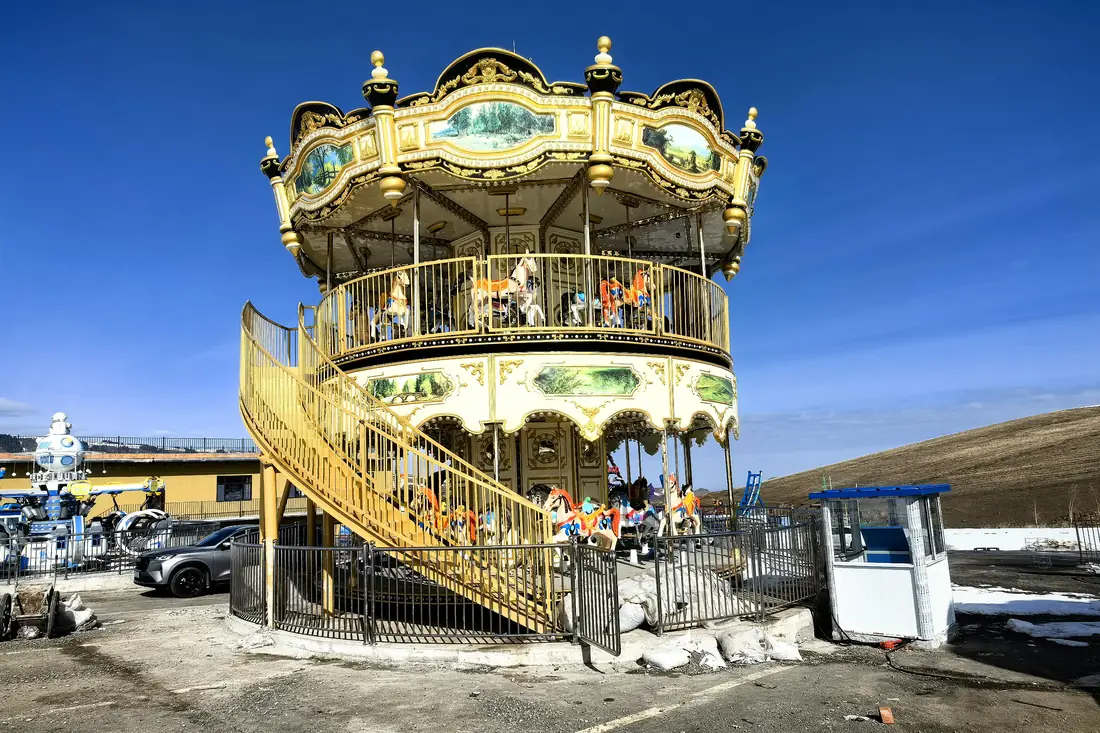
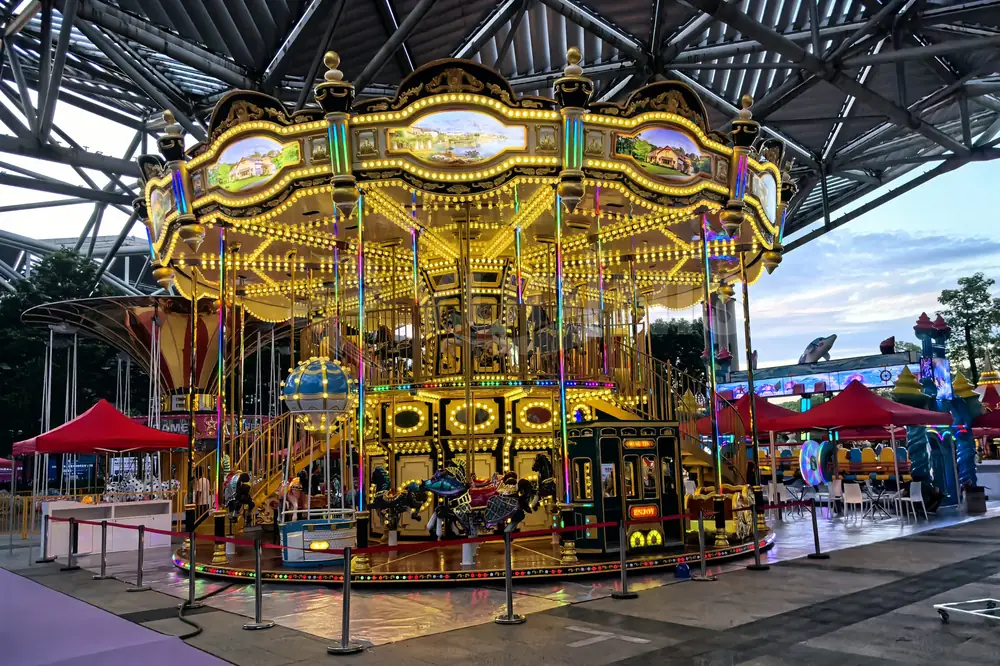
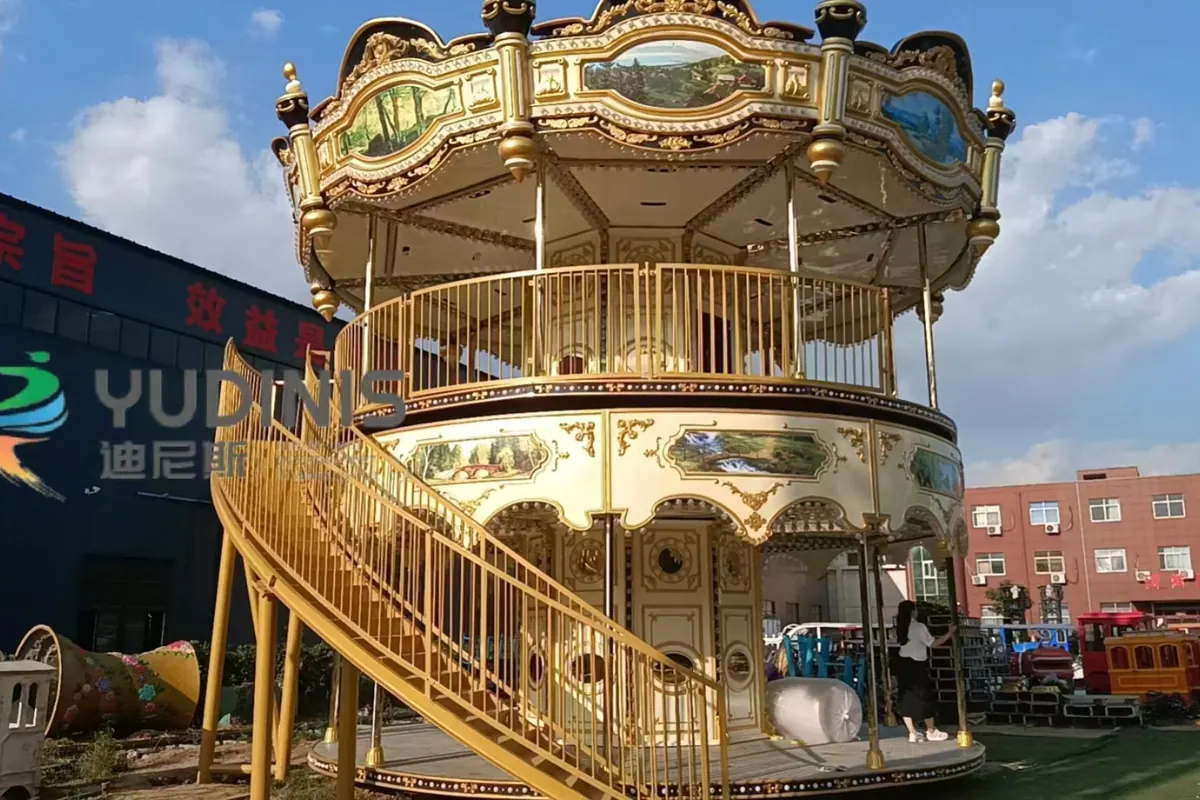
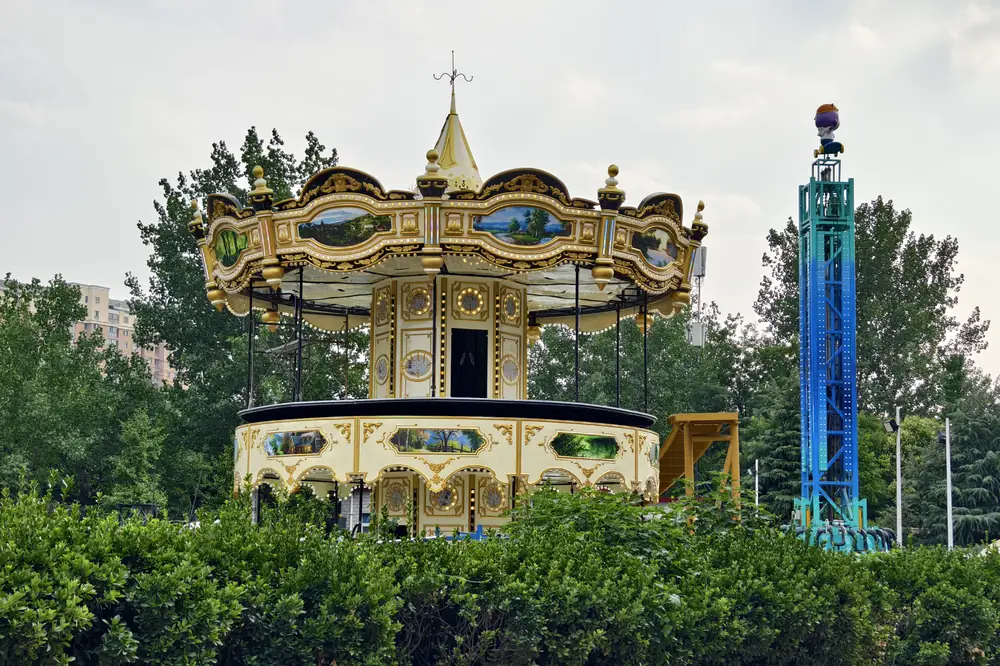
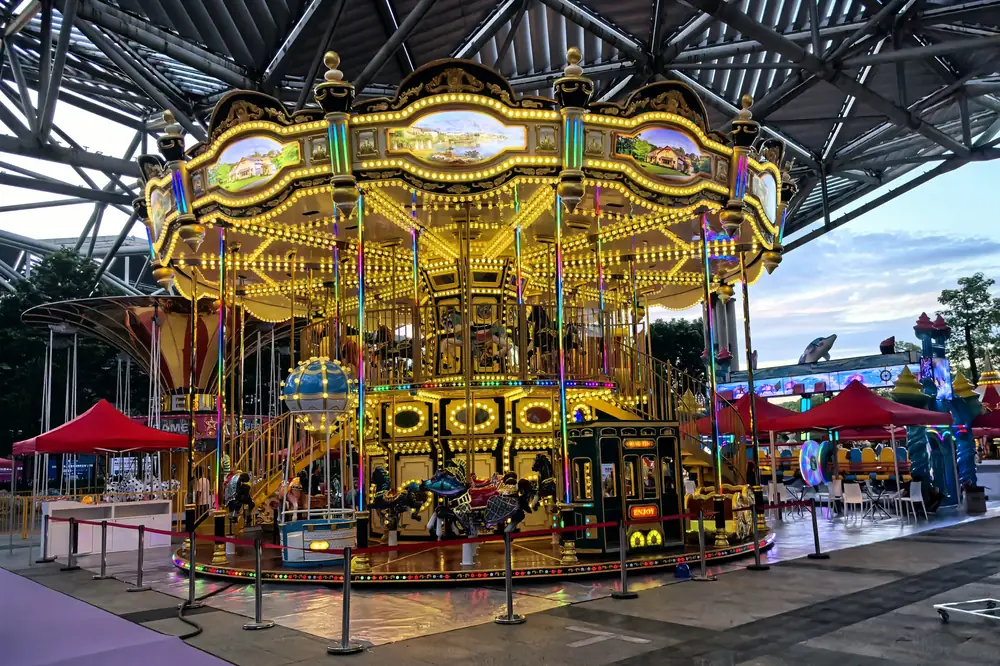
A double decker carousel for sale is bought for one reason: it puts twice the riders on ground that a single platform would already use. The trade is vertical. A two-level ride stands 9.8 m to 11.5 m tall, needs a crane on site and ships in three or four containers instead of one, and in return it gives a park the skyline piece a flat carousel cannot be.
This page covers what your site has to clear, how the 38 and 48-seat builds differ on the inside, and how the queue, the shipping and the install actually work. The carousel range lists both two-level builds beside the single-deck platforms if you are still weighing the shape of the ride.
What your site has to clear before a two-level carousel ships
A two-level carousel is decided by clearances rather than by taste. These five numbers are the ones that stop projects, and all of them are cheaper to confirm before the order than after it.
If the ride is going under a roof, the clear height is the whole brief: a two-level carousel needs its equipment height plus working room under the beams. Most shopping centres cannot release that, so compare the indoor carousel range first. Outdoors the constraint is usually the crane position and the turning circle for delivery vehicles rather than the platform itself.
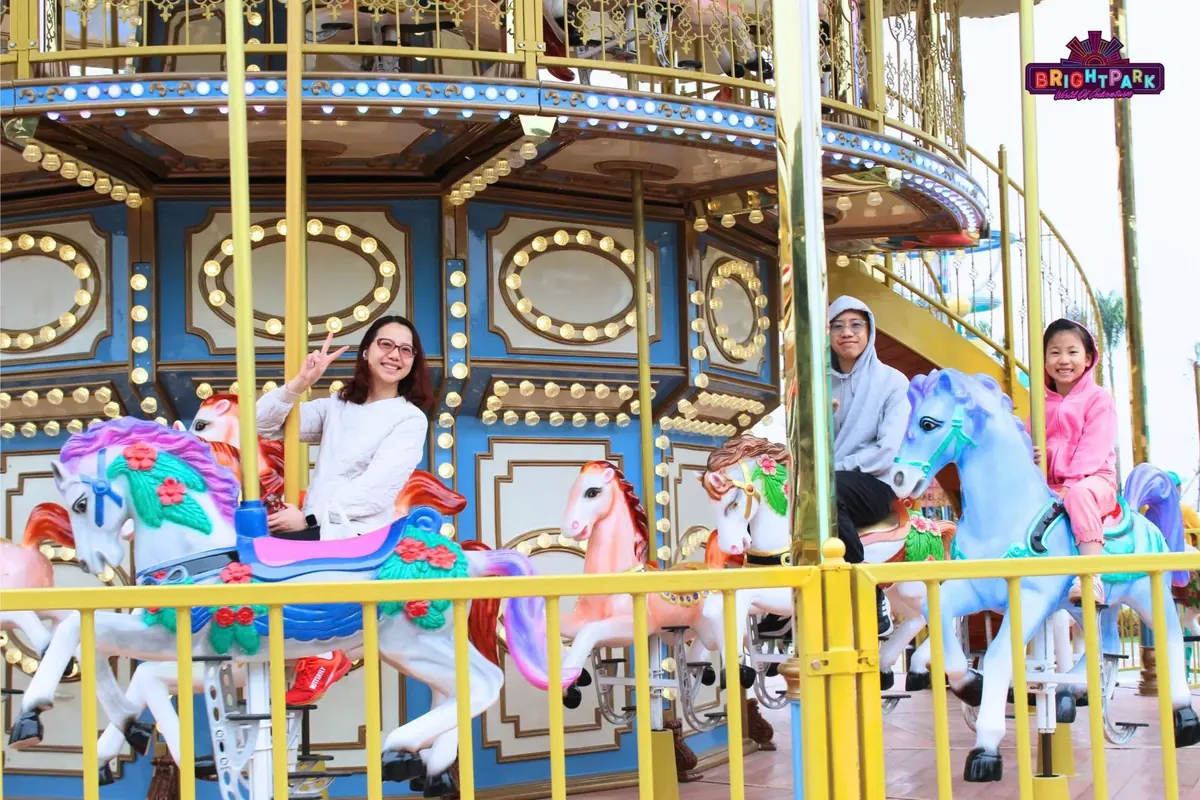

Double decker carousel for sale: 38 or 48 seats
Two builds cover the range, and they are engineered differently rather than being the same ride at two sizes.
| Build | Riders | Slewing diameter | Height | Drive | Cabins | Shipping | Price band |
|---|---|---|---|---|---|---|---|
| 38-seat double decker | 38 | 7.4 m | 9.8 m, operating height 5.1 m | 11 kW, 5.5 kW per deck, 5 rpm | 34 horses and 2 carriages | 3 x 40HQ + 1 x 20GP, about 18,800 kg | From US$105,000 |
| 48-seat double decker | 48 | 10 m, 14 m with the guardrail | 11.5 m, operating height 4 m | 6 kW, 7.8 kW installed, 3 rpm | 24 horses, 6 two-seat carriages, 2 balloons, 2 bus cabins | 3 x 40HQ, about 21,000 kg | From US$115,000 |
The 38-seat ride slews on a 7.4 m diameter and rotates at 5 rpm, with 5.5 kW on each deck. It is the two-level carousel for a park that has height but not width, and its operating height of 5.1 m keeps the upper deck in view across the whole site. The 48-seat ride makes the opposite trade: a 10 m slewing diameter, 14 m with the guardrail, 3 rpm and a lower operating height of 4 m, with cabins spread across horses, carriages, balloons and bus cabins. Where a park wants capacity and a landmark in one structure, this is the build. We built one for a park in Korea; the project notes show the model, the delivery and the opening date.
Need more? DINIS also builds 68-seat and 92-seat double-decker carousels to order – send the site size and the target capacity and we will come back with the layout drawing and a quotation. Where a single deck already meets your throughput, the big merry go round page compares both shapes from 36 riders up.


Floor, figures and the finish you can choose
Four decisions carry the look of a two-level carousel, and all four are made at the drawing stage.
Wood or aluminium
Two floor options: 10 mm anti-corrosion wood, which suits a vintage build, or 1.5 mm aluminium checkered plate for a classic or animal theme.
Horses, carriages and cabins
European or classic horses, animal figures such as rabbit, tiger, giraffe and lion, plus carriages and cabins where two riders sit together.
Theme decided at the drawing
Vintage, Christmas, European, ocean with coral cornices and sea-life seats, or a cartoon direction. The canopy, cornice and lighting follow the same theme.
Logo, park name and colours
Your logo or park name can be built into the canopy decoration, and the colour scheme is matched to the surrounding area.
Under the decoration it is the same build we use across the range: FRP for the horse bodies, the cornice and the platform perimeter, with a PVC top surface to keep water out. Fibreglass and resin are laid layer by layer in our own FRP workshop, the parts are polished, then putty and varnish go on before the paint is applied in a bake-paint booth of the type used for cars. That is what keeps a two-level ride flat and glossy after a season outdoors.
Two decks, one ticket: how the queue works
Boarding is where a two-level carousel is won or lost. The staircase to the upper deck is part of the structure, and it is sized for the queue rather than for one rider at a time.
- The upper deck carries its own railing, so parents can stand with younger riders at the top instead of sending them up alone
- Two configurations are available: figures spread evenly across both decks, or fewer figures upstairs so the upper level reads as a viewing deck with a longer view
- One ticket point serves both decks, and the answer to a queue that does not move is a second boarding point rather than more seats
- Supervision matches a single-deck ride, with one extra rule: the staircase stays clear while the ride turns
Shipping and installing a two-story carousel
A two-level carousel is a project rather than a delivery. The sequence is fixed, and the container plan is issued with the order so your site team can book the crane against it.
- Base and lifting plan
The base is cast to our drawing and signed off before shipment, and the crane position is agreed at the same time – the heaviest section decides the crane, not the finished ride.
- Unload and stage
Three or four containers arrive and the sections are staged in the order they will be lifted. Staging is what keeps a two-level assembly inside the planned days.
- Assemble the decks
Centre base, track and turntable first, then the lower deck, the staircase, the upper deck and the canopy. The electrical work follows the deck it serves, so the lower level is tested before the top is closed.
- Figures, test run and handover
Figures, carriages and lighting are fitted, the ride is run through a full cycle, and the manual, spare list and inspection records are handed over while your team is still on site.
Shipping weight runs from about 18,800 kg on the 38-seat build to 21,000 kg on the 48-seat one. Ask for the packing list with the layout drawing and you can price the trucking and the crane before you sign rather than after. If your pitch moves between sites instead, start from the fairground carousel page.
Double decker carousel questions buyers ask
Can a two-level carousel run indoors?
Only where the void allows 9.8 m or more of clear height. Most shopping centres cannot release that, so a two-level build is usually an outdoor or covered-hall installation.
How many containers does it take?
Three 40HQ containers plus one 20GP on the 38-seat build, and three 40HQ on the 48-seat ride. The packing list comes with the layout drawing.
Can the upper deck carry fewer figures?
Yes. Figures can be spread evenly across both decks, or the upper level can be left more open so it reads as a viewing deck.
What power supply does it need?
380 V three-phase. The 38-seat build draws 11 kW with 5.5 kW per deck; the 48-seat ride uses a 6 kW drive with 7.8 kW installed once lighting and control are added.
How long does assembly take on site?
Assembly is measured in days once the base is signed off. The crane plan and the container sequence are agreed with the order so the site team can book both in advance.
Can we order a larger two-level carousel?
Yes. DINIS also builds 68-seat and 92-seat double-decker carousels to order, with the layout and quotation based on your site.
Next step
Send the plot, the clear height if the ride sits under a roof, and the capacity you need at peak. We will confirm whether a 38 or 48-seat two-level build fits, and come back with the layout drawing, the container plan and the price band.
- Country
- Site size or plan
- Indoor or outdoor
- Rides you have in mind
- Opening date
Prefer to talk? WhatsApp us, or email [email protected]