Buying notes for the Carnival Carousel for Sale

A carnival carousel for sale is chosen by the route before it is chosen by the seat count. Sixteen riders is the standard traveling build; 24, 26 and 36-seat rides are what a longer season or a fixed pitch justifies; and the 38-seat double decker is engineered as a mobile ride, which is why it appears on fairground lists and not only in parks. Seasonal demand is why Halloween and Christmas versions exist in the same range.
This page is about that arithmetic: how many fairs you can work in a season, what you move the ride with, and which build earns most between loading and packing. If you are comparing carnival carousel rides for sale, the two numbers that decide the shortlist are the container and the crew.
Carnival carousel for sale: the number that decides your season
Two rides with the same seat count can work a very different number of fairs, because the loading plan decides how fast a crew moves them.
What a carnival carousel must survive on the road
Four parts of a carnival carousel take more punishment than a fixed one, and they are specified for it.
Built to be taken apart
The platform, canopy and figures are split into transportable sections without weakening the load path, so the same bolts go in and out season after season.
The list you keep on the truck
Bearings, fasteners and the connecting parts are the items to keep as spares. Ask for the recommended list with the quotation.
Light that survives the road
The lighting package is fixed for transport and part of the build, which is what makes the merry go round ride read from the far end of a fairground at night.
Running from a socket or a set
A 380 V supply is ideal. Where the pitch only offers a generator, the installed power on the 6 m and 8 m platforms keeps the set inside a normal size.


Carnival carousel rides: 16 to 38 riders, and the truck decides the size
Six builds cover the range. The choice is usually made by the container and the pitch, not by the decoration.
| Build | Riders | Platform and height | Power | Transport | Price band |
|---|---|---|---|---|---|
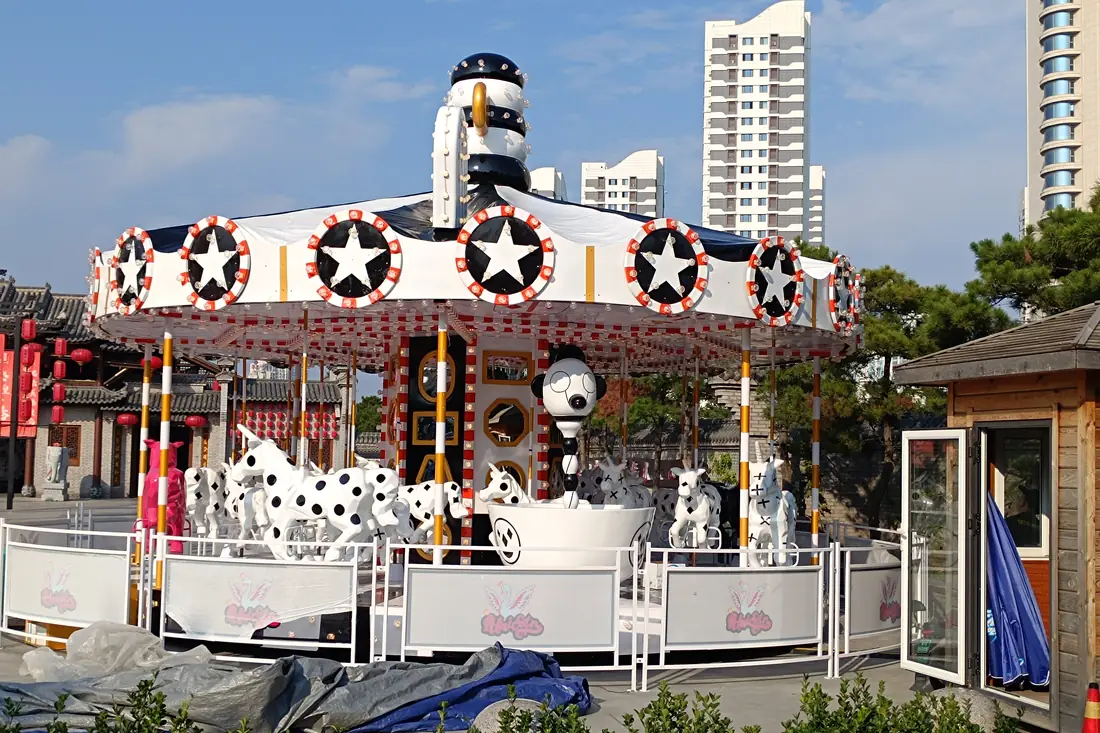
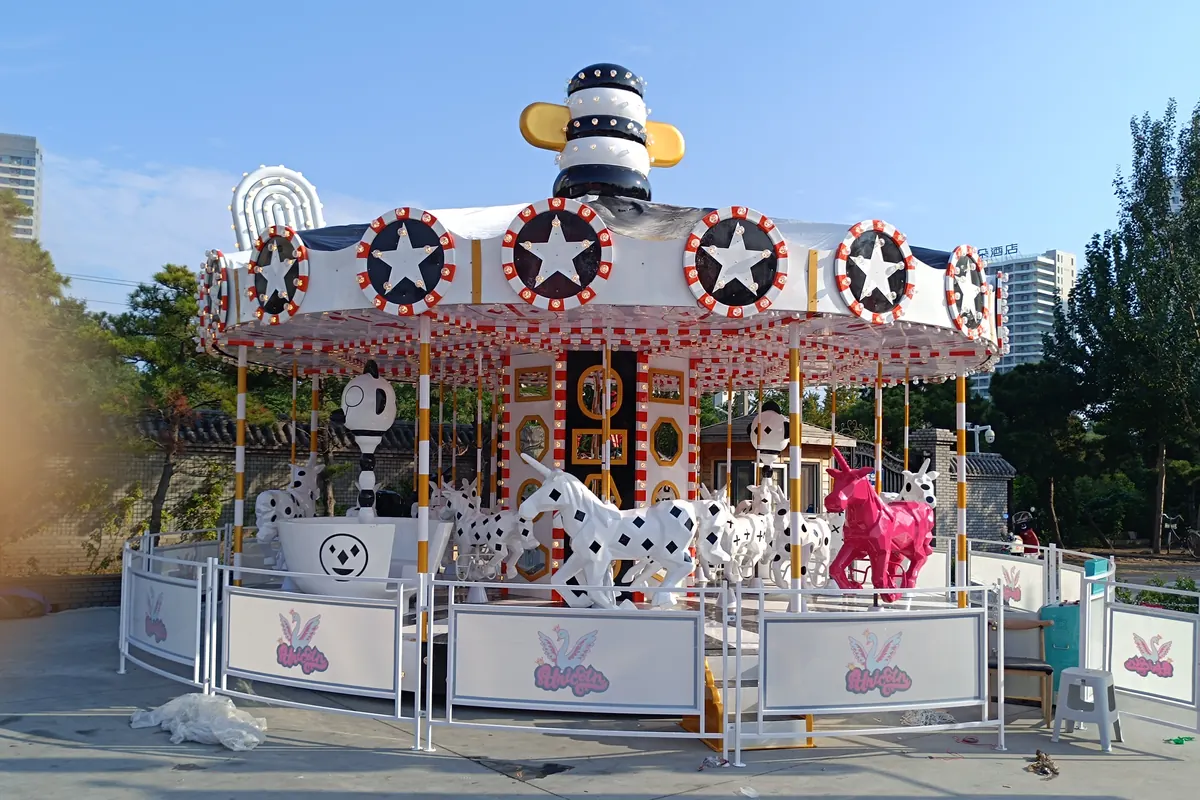
| Animal theme carousel | 16 | 6 m, 5.5 m high | 380 V, 5 kW | 1 x 20GP, about 2,500 kg | From US$12,400 |
| Ocean theme carousel | 24 | 8 m, 5.5 m high | 380 V, 10 kW | 1 x 40HQ, about 4,800 kg | US$22,000 – 32,900 |
| Dream Star carousel | 26 | 8.5 m, 5.5 m high | 380 V, 5 kW | 1 x 40HQ, about 7,300 kg | From US$45,000 |
| 36-seat luxury carousel | 36 | 11 m, 13 m fenced, 10 m high | 380 V, 6 kW, 8 kW installed | 2 x 40HQ, about 13,600 kg | From US$66,800 |
| 38-seat double decker, mobile build | 38 | 7.4 m, 9.8 m high, two decks | 380 V, 11 kW | 3 x 40HQ + 1 x 20GP, about 18,800 kg | From US$105,000 |
| Folding carousel | 16 | 7.7 m in operation, 4.2 m high, folds to 2.65 x 3.9 m | 220 V single phase, 7 kW | Travels on its own trailer | On request |
The 16-seat platform is the one that fits a tight pitch and a single truck. The 24 and 26-seat builds earn more per cycle where the fairground is big enough to hold the queue. A 36-seat ride suits a long fixed pitch or a fair that runs for weeks rather than days, and the 38-seat two-level build is for the operator who has one flagship fair and needs the capacity there. If your route has more stops than sites – a fair every weekend – the folding carousel is the model built for that rhythm. The carousel ride for sale puts every platform, drive and container plan side by side.

Where a carnival merry go round earns
A carnival carousel is paid for by cycles, not by novelty. Sixteen riders a cycle on the 6 m platform, twenty-four on the 8 m build and thirty-six where a long pitch justifies the bigger ride, with the cycle time set by how fast your crew boards. The questions that decide the return are the ones an operator asks before signing the pitch: how many days does the fair run, what ticket price does the market take, and how many cycles does the platform need to cover the move itself. A traveling carnival in the Czech Republic uses a double-decker on the same principle; the project notes cover the transport plan.
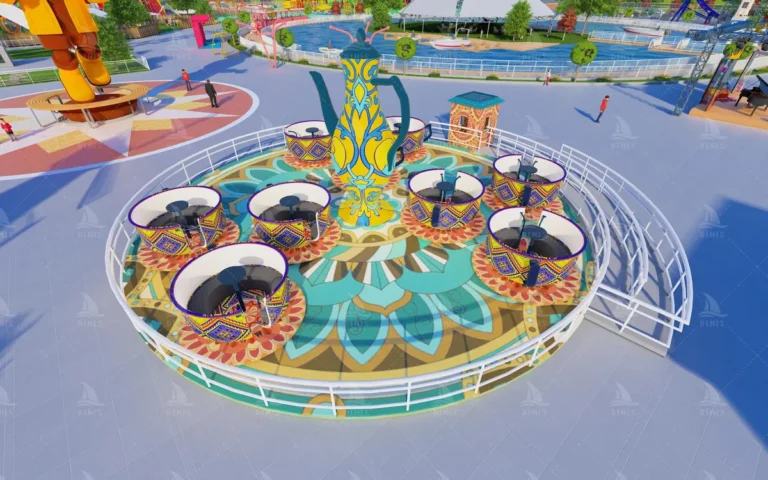
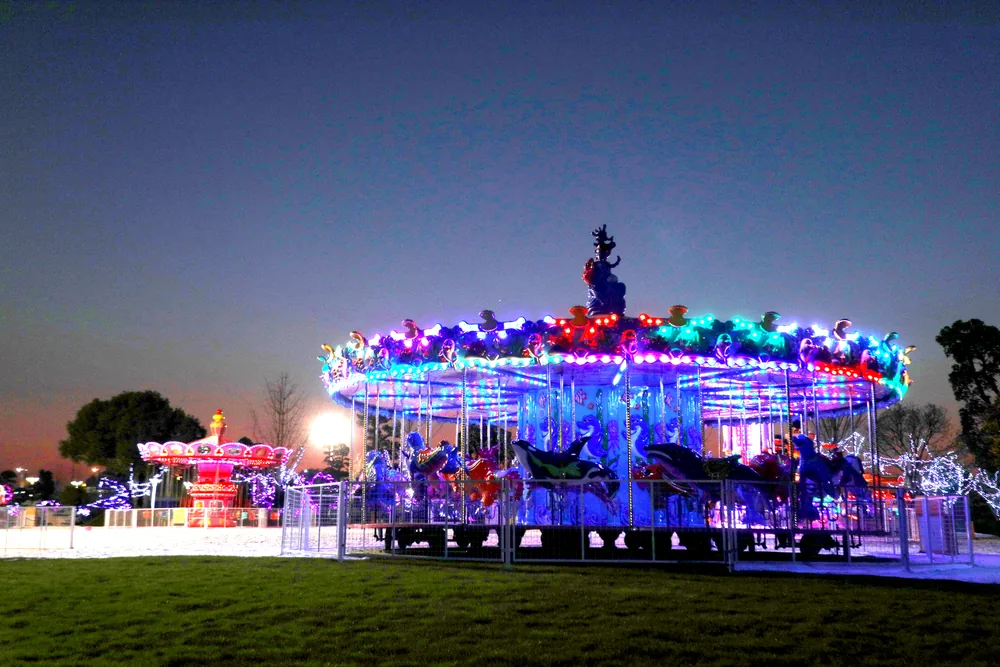
That is also why the decoration matters commercially. A carnival ride that photographs well and lights up the pitch is the one families walk towards, and it is the reason operators order the theme with the ride rather than after the first season. Compare the fairground carousel if your site is a fixed one.
A season with a traveling carnival carousel
Traveling operators plan the carousel around the calendar rather than the site, and the ride has to hold up at each of the three stages.
- Before the fair
Check the wearing parts, the lighting and the fence before loading. A failed lamp on the first night costs more than the spare it replaces.
- On the pitch
Assembly, power and the boarding line are set in the first day. The decoration and the lighting are what pull visitors across a dark fairground, and a carnival horse carousel with a strong figure set is the one families walk towards.
- After the fair
Clean, grease and pack by section, and write down what failed. That list is what you order from the factory before the next season starts.
Carnival carousel solutions by pitch
Not every booking needs the same ride. A fairground pitch with mains power and a city square with a generator are two different briefs, and the platform should follow the pitch rather than the other way round.
| Pitch or route | Build that fits | Logistics package | Why it works there |
|---|---|---|---|
| Weekly route, several towns | 16-seat carousel, 6 m platform | One 20GP, fixed rebuild sequence, spare kit on the truck | The container travels on one vehicle and the crew repeats the same assembly |
| City festival or square event | 16-seat carousel on temporary power | Generator plan, removable fence, 5 kW load | Keeps the ride inside a normal event supply where only temporary power exists |
| Holiday fair or Christmas market | 16-seat carousel with a themed lighting package | Festive figures, lighting set, fast assembly | The evening look is the product; the ride has to read from the far end of the market |
| Beach or promenade fair | 24-seat carousel, marine paint specification | Heavier coating, sealed electrics, fenced base | Salt air and wind need the heavier paint system before capacity matters |
| Fixed funfair pitch, long season | 24-seat fairground carousel, 8 m platform | One 40HQ, permanent fence, service schedule | More capacity and a decoration package that holds up over months outdoors |
| Multi-week fair on a permanent site | 26-seat carousel, 8.5 m platform | One 40HQ, queue rails, lighting package | Dry assembly is not the priority here, so the extra seats pay for themselves |
| Flagship fair, high footfall | 36-seat carousel, 11 m platform, 10 m tall | Two 40HQ containers, crane plan, larger crew | Where the ride is the landmark of the fairground and the queue keeps coming |
| Big fair with limited ground | 38-seat double decker, mobile build | Three 40HQ plus one 20GP, crane plan, two-deck fencing | Two decks carry the capacity of a much wider single platform |
| Theme park carnival zone | 24 to 36-seat carousel | Permanent base, themed finish, service contract | Where the ride is a permanent zone rather than a one-week pitch |
| Indoor mall carnival | 16-seat indoor carousel, imitation top drive | Fence, floor protection, after-hours assembly | Where the event is inside a covered centre rather than a fairground |
| Route with no fixed schedule | 16-seat folding carousel | Own trailer, 220 V single phase, folding frame | Folds onto its wheels between bookings and needs no container |
The pattern is simple: the tighter the schedule, the more transportable the ride has to be; the longer the pitch and the better the power supply, the more seats are worth paying for. What decides the money is not the platform size alone but the number of bookings the ride can physically reach in a season.
Carnival carousel questions buyers ask
How is a carnival carousel different from a fixed one?
Transport and assembly. The traveling build splits into sections that a crew can move between fairs; a fixed ride is assembled once and stays.
Which sizes can work a route?
From 16 riders in one 20GP up to a 38-seat two-level build in four containers. The build is set by your truck, your crew and the pitches you already have.
Can it run on a generator?
Yes. The 16-seat platform draws 5 kW and the 24-seat build up to 10 kW, so a normal fairground set covers them.
What spare parts should travel with it?
Bearings, fasteners and connectors. Ask for the recommended spare list and keep it with the ride rather than at the depot.
Which carnival carousel suits a tight pitch?
The 6 m platform with 16 seats. It fits a compact fairground, travels in one 20GP and still fills a cycle on a busy evening.
Where do we start?
Send the fairs you already have booked, the transport you use and the power available. The buyer’s guide lists the rest.
Next step
Tell us how many fairs you expect to work next season and what you move them with. We will confirm the platform, the transport plan and the power, and quote the decoration that makes the ride stand out on a dark pitch.
- Country
- Site size or plan
- Indoor or outdoor
- Rides you have in mind
- Opening date
Prefer to talk? WhatsApp us, or email [email protected]