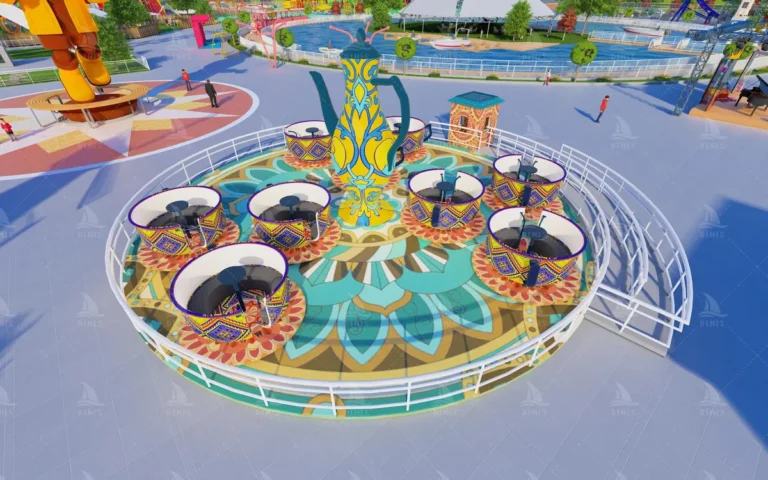
Choosing carousel seats and figures is not simply a colour decision. Seats control who can ride, how quickly guests board, how much movement the carousel offers, how the ride photographs and how much maintenance the operator must plan.
A strong layout usually combines recognisable horses with a smaller number of animal figures, carriages or themed vehicles. The right ratio depends on the venue, passenger profile and mechanism, not on filling the platform with as many different shapes as possible.
Start with the passengers, no el catalogo
Before selecting figures, define the main visitor groups. A family park may need easy boarding for young children and parents. A mall carousel may prioritise visual impact from several directions. A fairground may need fast turnover and figures that remain distinctive at night.
- Age and height profile of the primary riders.
- How many adults are expected to ride with children.
- Peak queue and target boarding time.
- Indoor or outdoor operation and the required theme.
- Whether the carousel should have a landmark, traditional, family or novelty character.
Carousel seat and figure types at a glance
| Seat or figure type | Ride character | Typical strength | What to verify |
|---|---|---|---|
| Galloping horse | Rotating platform with the horse moving up and down, subject to the carousel mechanism. | Traditional carousel identity and strong rider appeal. | Rod or hanger type, lifting stroke, clearance and restraint. |
| Fixed-height horse | The platform rotates while the figure remains at a fixed height. | A calmer option for some younger or less confident riders. | Whether the selected carousel mechanism supports fixed figures and how boarding is arranged. |
| Animal figure | Horse-style motion with a different character shape. | Tema, photo value and differentiation for children’s parks. | Rider fit, forma del asiento, visibilidad, reinforcement and cleaning access. |
| Carriage or bench seat | Seated carriage-style option, often carrying more than one rider. | Easier shared riding for parents, children and mixed-age groups. | Capacidad, step height, door or opening, seat depth and restraint plan. |
| Themed vehicle | Car, plane, balloon, boat or other shaped seat. | A recognisable feature that can anchor a themed zone. | Huella, turning clearance, boarding position, internal space and mounting. |
Galloping and fixed-height horses
Traditional galloping horses remain the strongest visual signal of a carousel, but not every rider wants the same motion. A combined ride can use moving horses for the main experience and fixed-height horses or carriages for guests who prefer a calmer seat. The exact mix must be supported by the selected drive and figure mechanism.
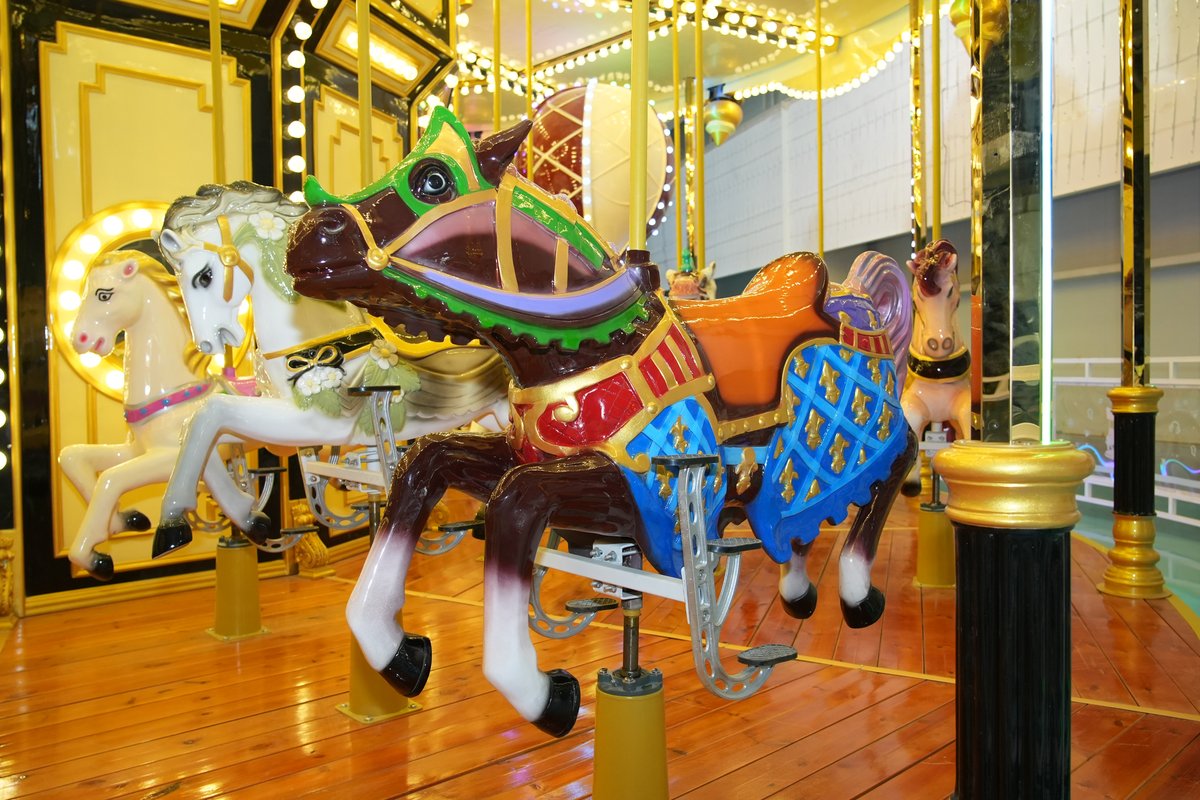
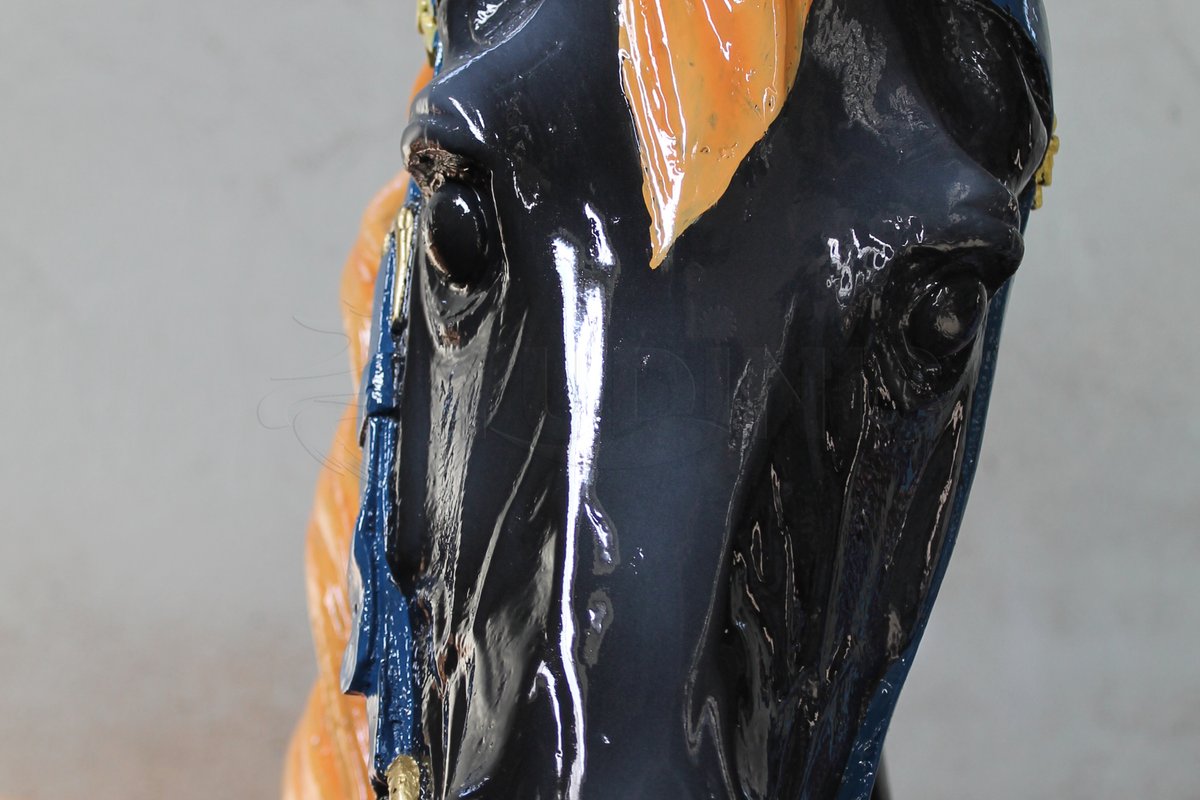
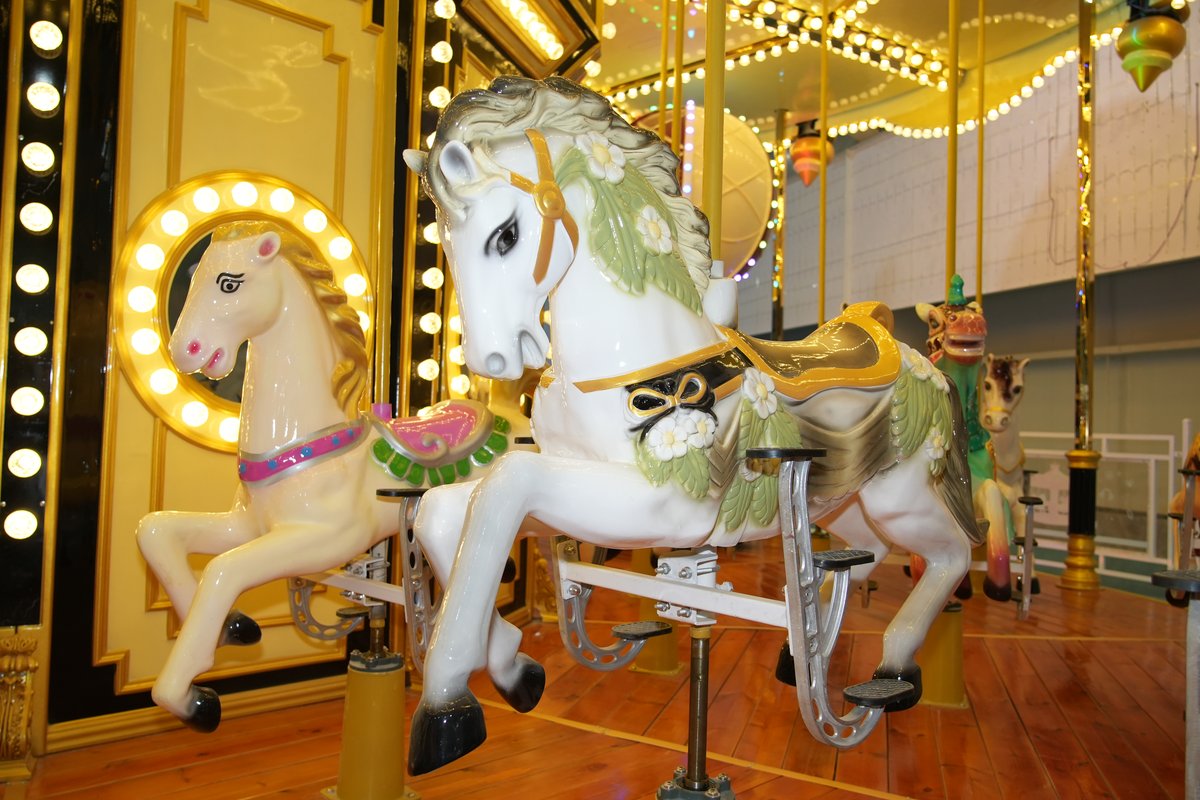
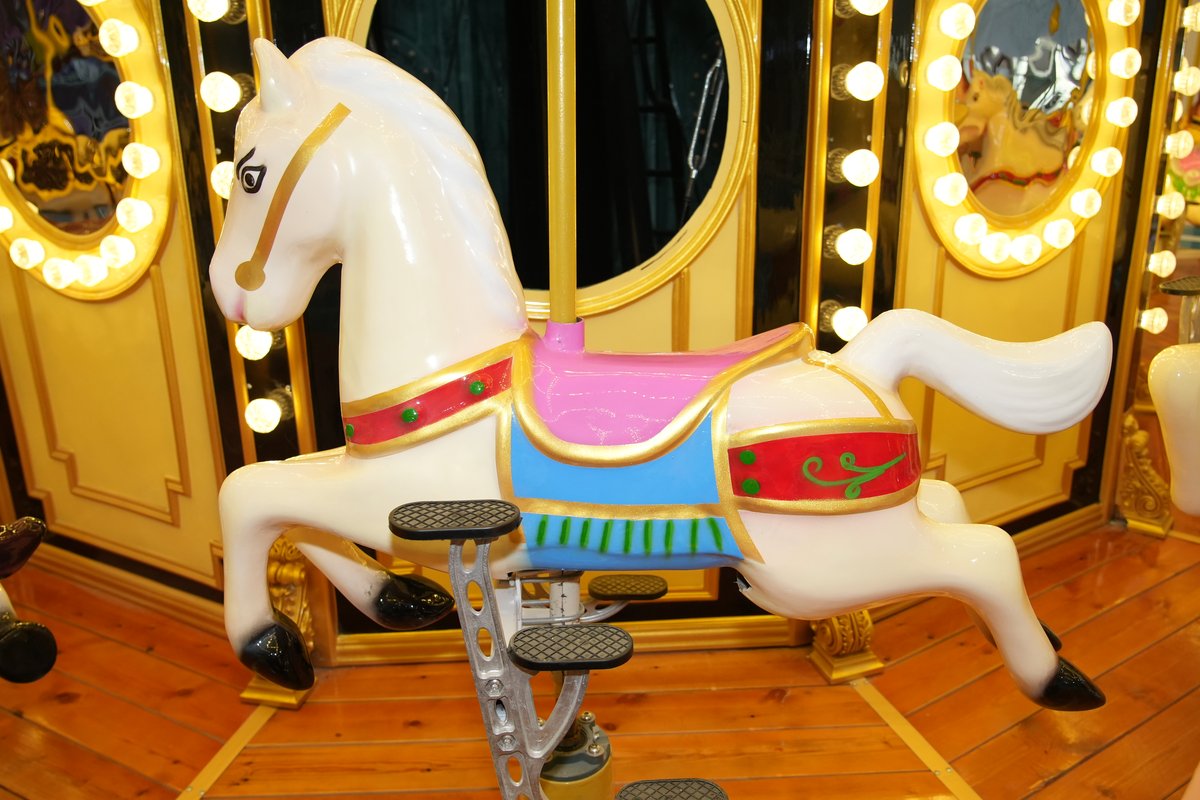
Compare more than the horse shape. The seat depth, handhold position, rider foot support, rod angle, lifting clearance and boarding access all affect how the figure works in service. A figure that photographs well but is difficult to board can slow every cycle.
Animal figures bring theme and repeat appeal
Giraffes, cisnes, leones, sea creatures and other animal figures create variety without abandoning the carousel format. They work best when the whole ride has a coherent visual story: platform detail, centre decoration, lighting and colours should support the animal selection.
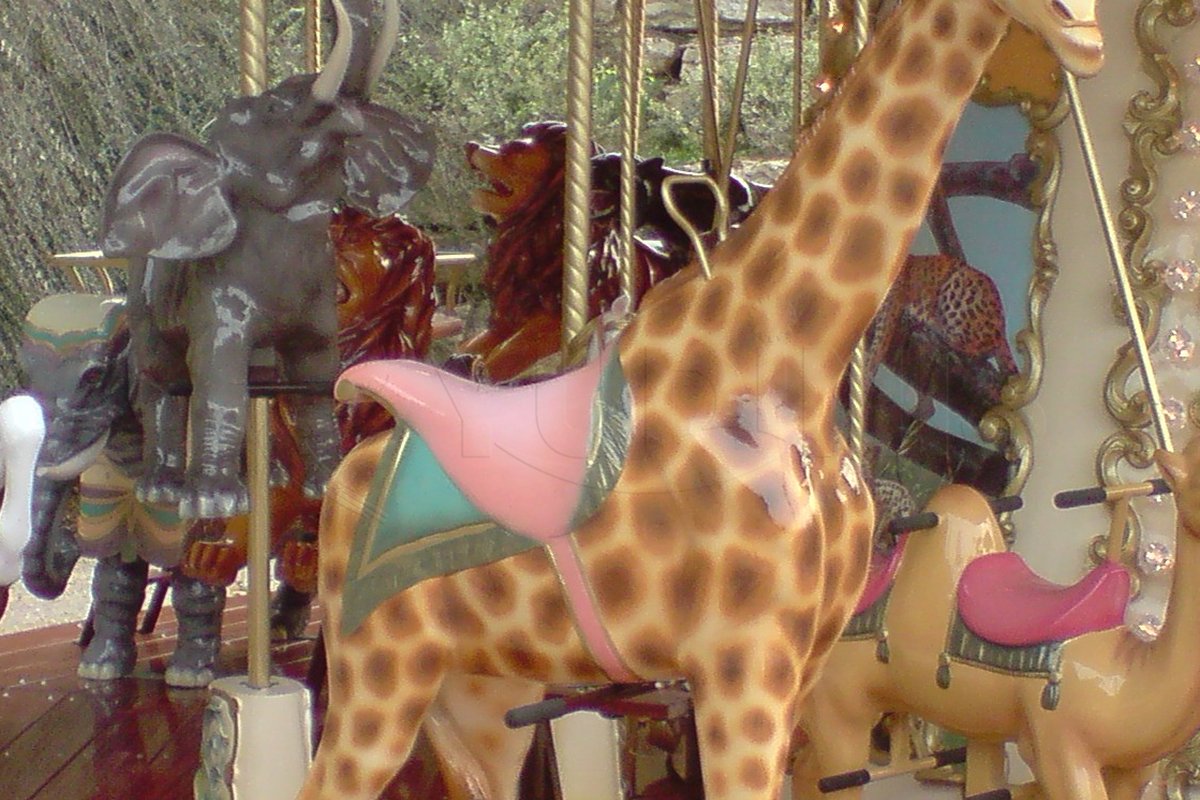
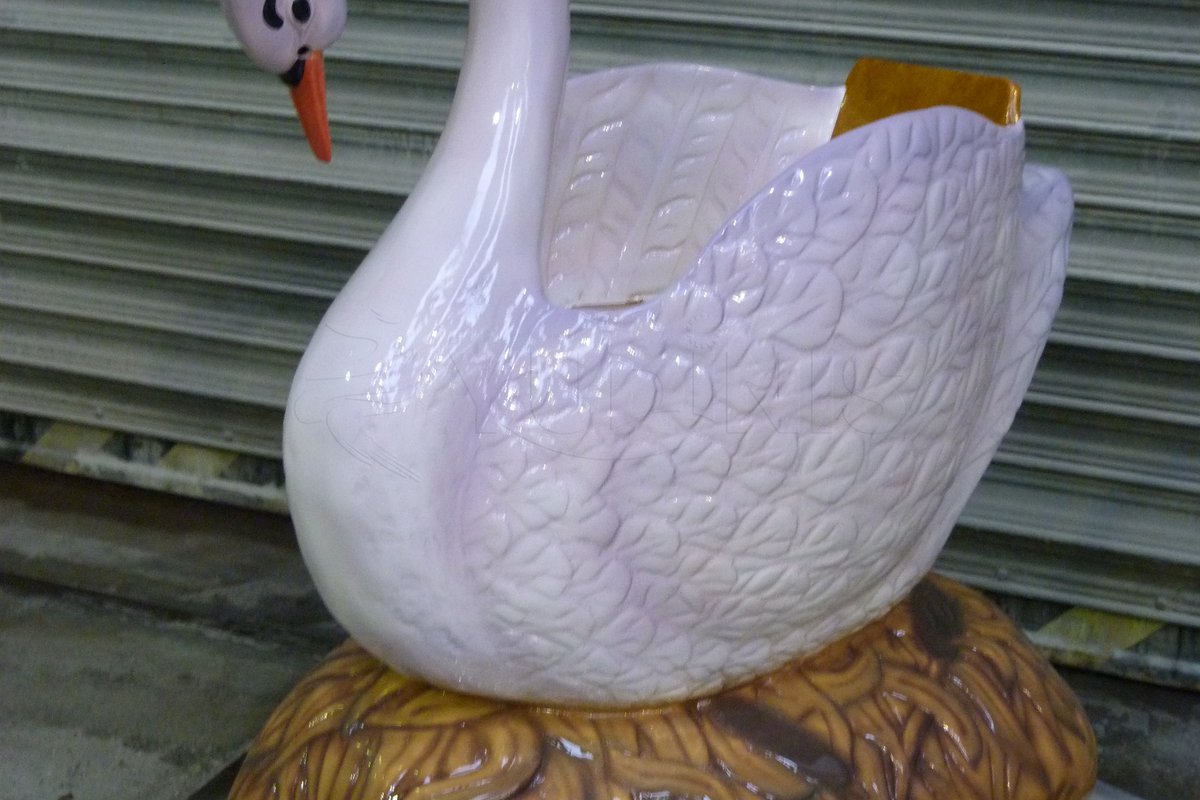
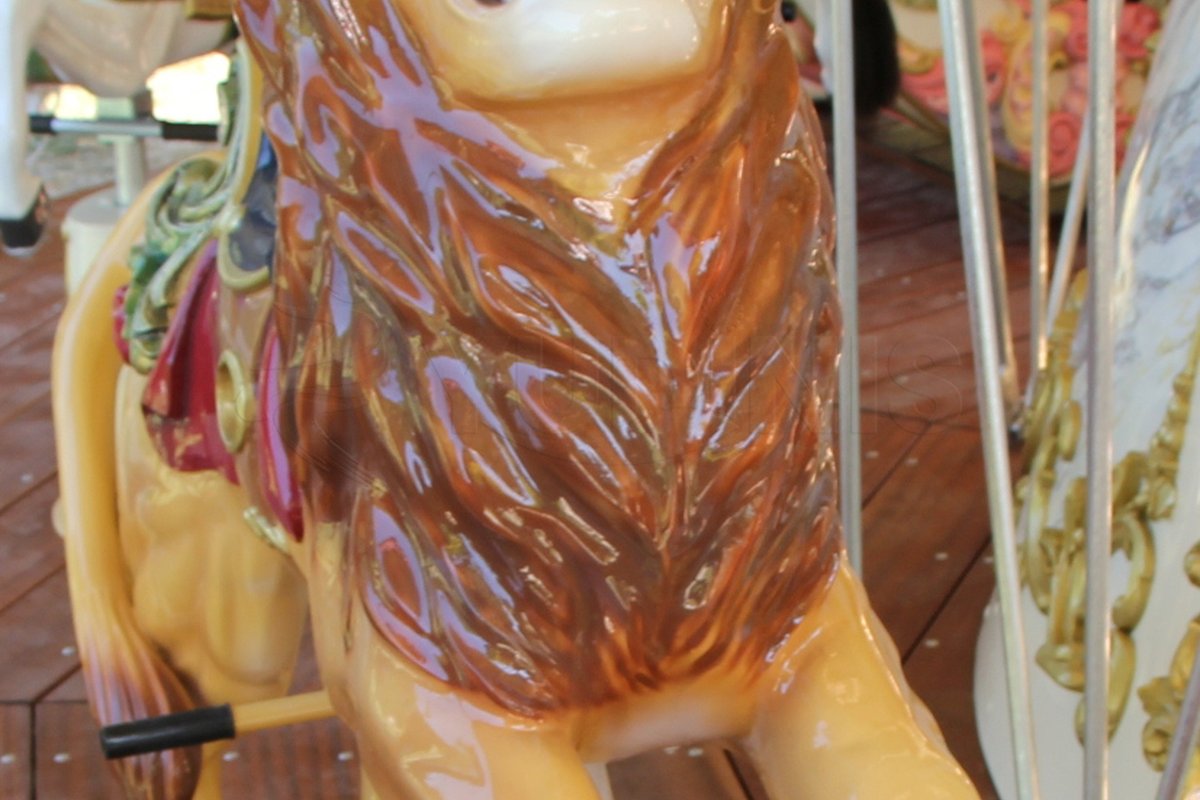
For children’s parks and family entertainment centres, animal figures can make the carousel easier to market as a themed attraction. For a traditional fairground or vintage carousel, a smaller number of animals may work better as accents rather than replacing the horse-led identity.
Carriages, bench seats and themed vehicles
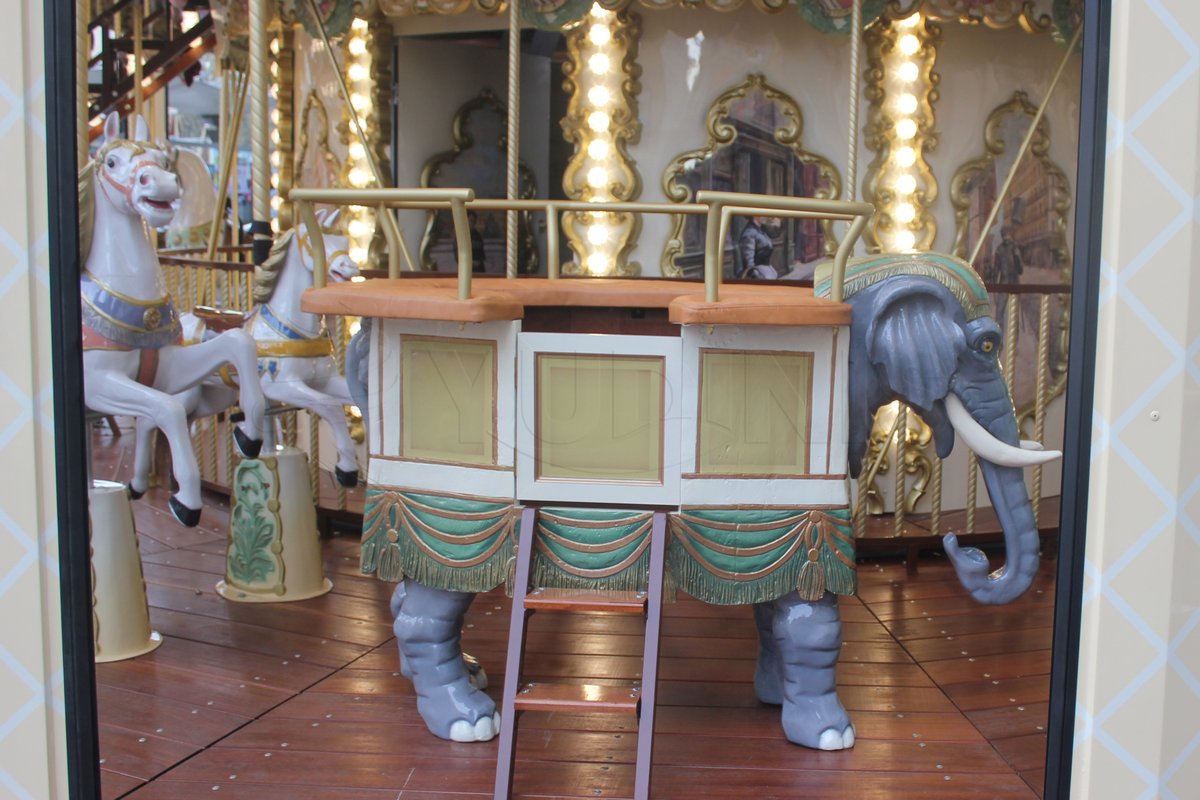
Carriages and bench seats add a different riding style. They can support shared family riding and create a clear alternative for visitors who do not want to mount a horse. Themed vehicles such as planes, cars and balloons give the carousel a stronger story and can become the most photographed seats on the platform.
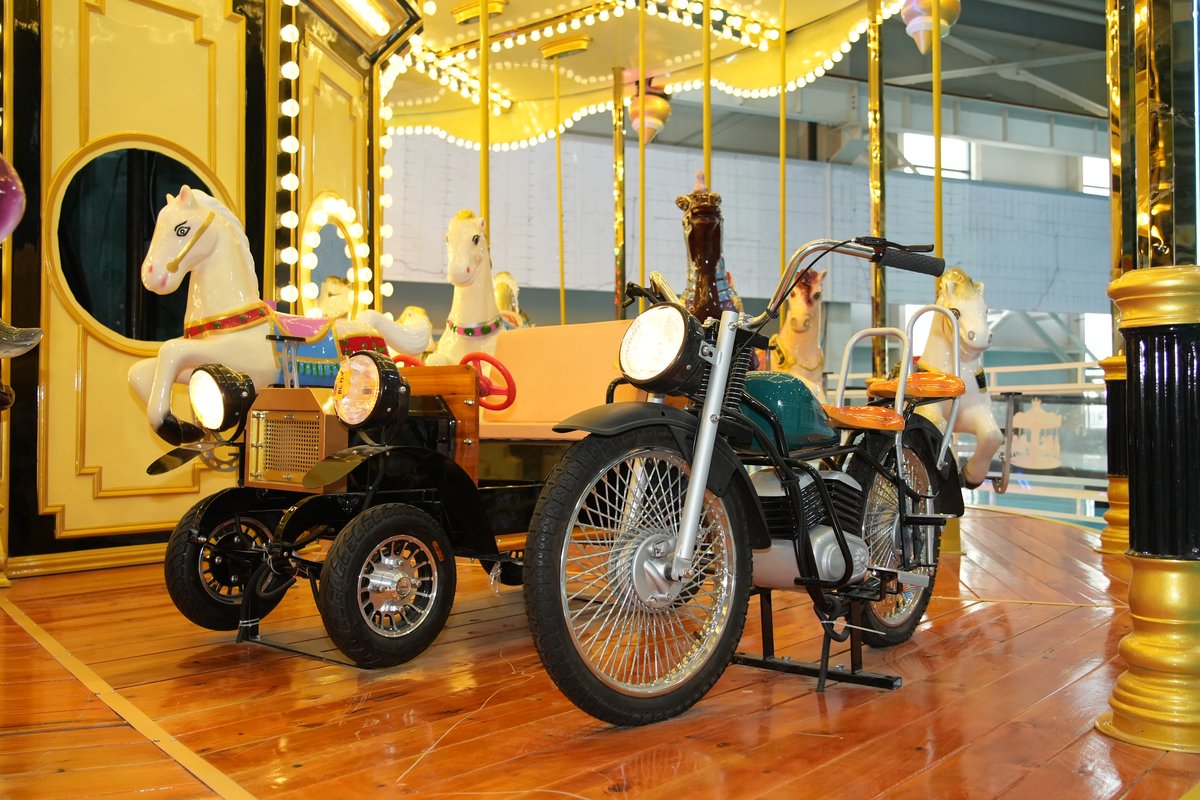
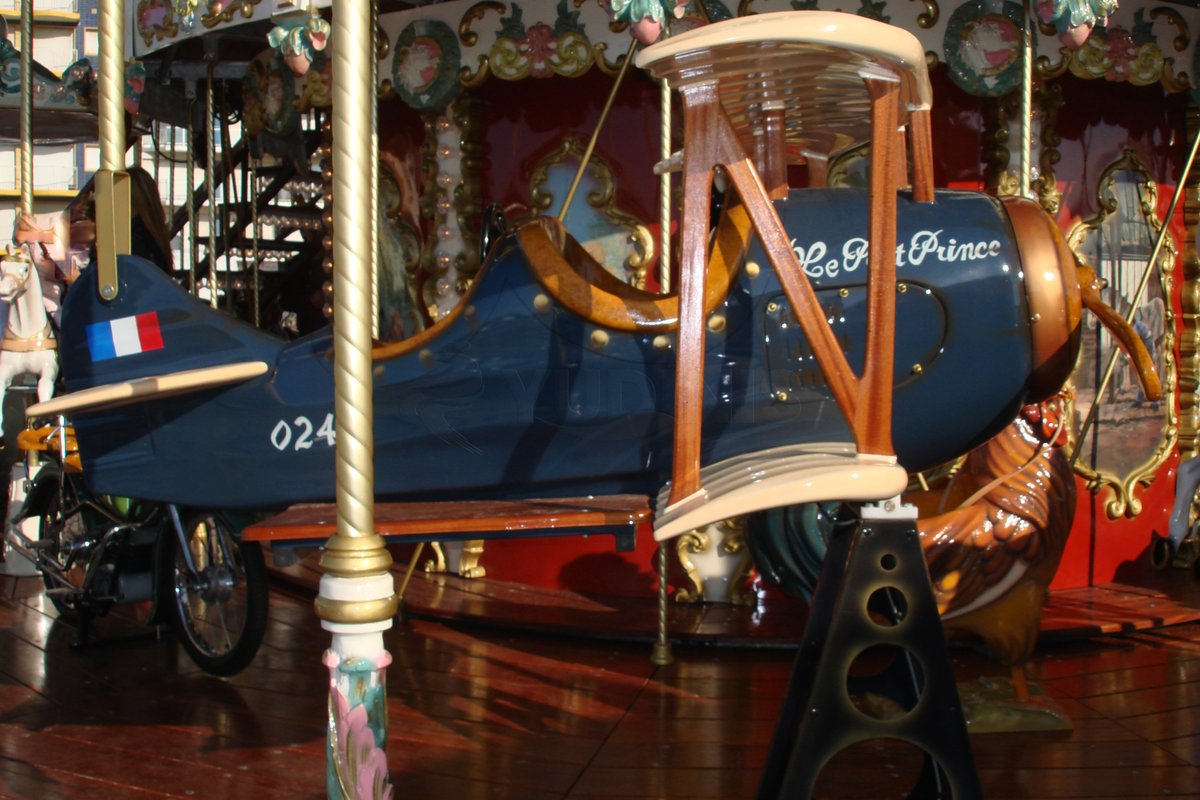
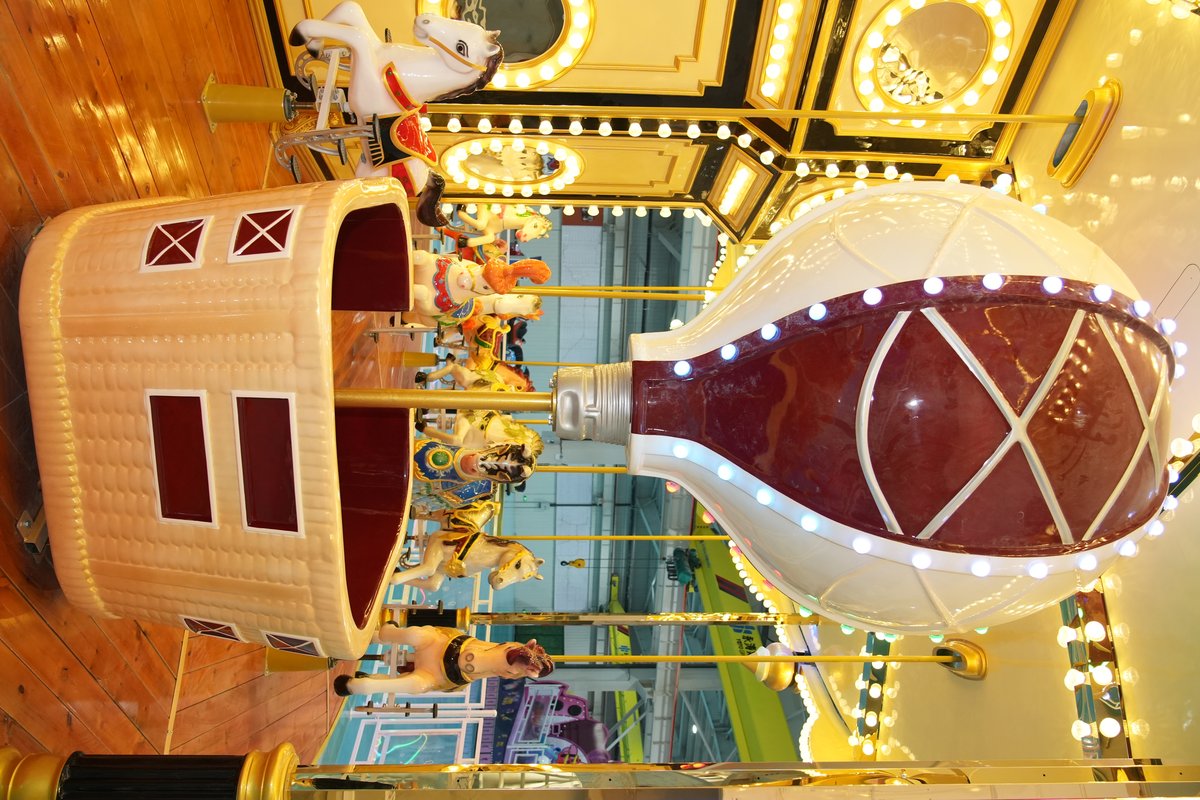
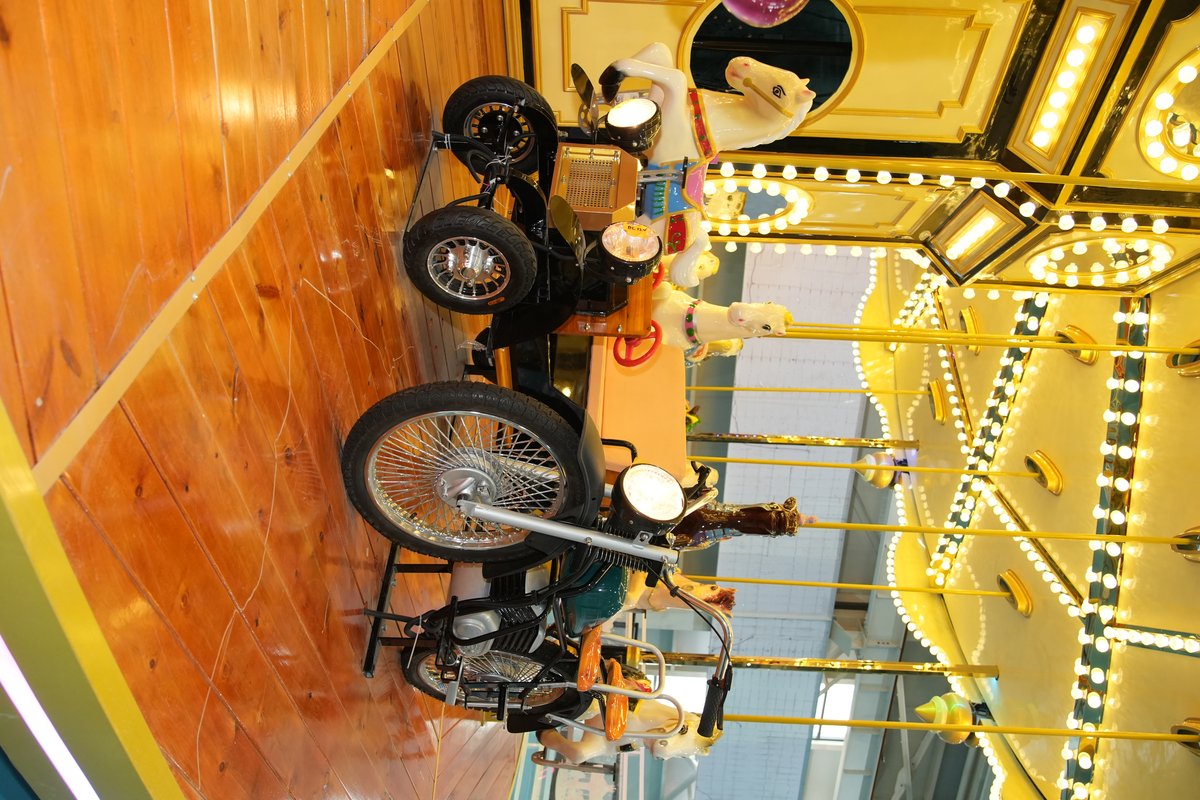
These larger seats need early layout planning. Their footprint and turning envelope may differ from a horse, and the boarding side, door opening and internal seat arrangement can affect the queue route. Confirm them against the platform drawing before approving the decorative concept.
How to plan the seat mix
There is no universal ratio of horses to animals and carriages. A useful starting method is to balance four roles:
| Ride role | Planning question | Typical design response |
|---|---|---|
| Signature seats | What makes the carousel identifiable from a distance or in photographs? | Distinctive horses, large animal figures or a themed centrepiece. |
| Core capacity | Which seat type fills most of the platform and supports peak throughput? | A consistent primary figure family with known boarding and maintenance needs. |
| Accessible shared riding | How will parents ride with younger children or guests choose a calmer seat? | Carriages, bench seats, fixed-height figures or a selected number of wider seats. |
| Visual variation | How much variety is useful before the ride becomes visually noisy? | A limited mix of animals, colours or vehicles tied to one theme. |
A practical layout protects circulation first: boarding positions must remain clear, and no figure should restrict the queue when neighbouring seats move. Capacidad, rider mix and the platform mechanism should be settled before increasing the variety of shapes.
Movement, mounting and station interface
Carousel seats are connected to a moving platform and may also connect to an upper drive, lower guide, lifting rod or another mechanism. The seat shape is only one part of the interface. Before ordering, confirm:
- How each seat moves and the full operating envelope.
- Where the rider loads and whether the seat is stable during boarding.
- Rod, hanger or base dimensions and how the figure is retained.
- Restraint or handhold arrangement for the intended rider group.
- Clearance between figures, centre column, platform edge and fence.
- Inspection access for fasteners, bearings and connection hardware.
Embarque, rider fit and operating efficiency
A visually attractive seat can still slow the ride if children cannot mount it confidently or staff must assist every cycle. Consider step height, foot placement, forma del asiento, handholds and whether an adult can stand beside a child during loading. Final rider rules and use limits must be confirmed for the specific carousel and local requirements.
Where one seat can carry several riders, define how those seats are counted in the operating plan. The nominal passenger total should reflect the actual approved seat configuration, not a theoretical number added from every possible figure.
Tema, colours and customization
Start with one theme direction and apply it consistently. Colours and decorative details can link horses, animals and carriages into one ride rather than making each figure look like a separate project. Logos or bespoke graphics should be reviewed with the final seat drawing because curved surfaces and joint positions affect how artwork is applied.
For projects requiring a smaller set of horses or custom seat changes, el fiberglass carousel horse guide explains dimensions, mounting and demoulding requirements for replacement figures.
FRP construction and finish
Most decorative carousel horses, animals and themed vehicles use moulded FRP shells with steel inserts and supporting hardware. In the process used for these figures, non-load decorative areas generally receive three complete FRP layers, while load-transfer and connection areas generally receive four to five complete layers. One complete layer means one glass-fibre layer plus resin.
Inspect the internal seam treatment as well as the paint. Split figures are bonded and reinforced before finishing; a polished exterior cannot compensate for weak internal bonding or incorrect mounting reinforcement.
What to send for a seat and figure recommendation
- Carousel diameter, platform drawing or available site area.
- Target passenger capacity and expected rider age mix.
- Indoor or outdoor operation and preferred theme.
- Required balance of galloping horses, fixed seats, animals and carriages.
- Any brand colours, logo or visual references.
- Drive mechanism and any existing figure interface, for replacement projects.
- Required delivery date and operating market.
Send the project information through the carousel seat and figure inquiry. The next step is a layout and seat-mix recommendation, followed by confirmed specifications and quotation.
Carousel seat and figure questions buyers ask
Should every carousel horse move up and down?
No. A mix of galloping and fixed-height figures can create different rider experiences, provided the carousel drive and figure connections support that configuration.
Are animal figures suitable for family parks?
Sí. Giraffes, swans and other animals can make the carousel more distinctive and give children a clear visual choice, as long as rider fit and boarding are suitable.
Are carriages only for small children?
No. Carriages or bench seats can help parents ride with children and provide a seated alternative, but capacity and restraint rules depend on the selected design.
How many different seat styles should one carousel use?
There is no fixed number. A coherent primary style, a small number of feature figures and accessible shared seats usually work better than many unrelated designs.
Can the seat mix be customised?
Seat layout, figure type, colour and theme can be developed around the platform plan. The final configuration is confirmed with capacity, movement and manufacturing drawings.
Can I replace only some seats on an existing carousel?
It may be possible, but the existing movement and mounting interface must be measured. A visually similar figure is not enough to prove compatibility.
How does seat choice affect passenger capacity?
Each approved seat position contributes to the passenger total. A carriage may carry several riders, while a single horse usually carries one; the final count must match the approved layout.
Do animal and vehicle seats use the same FRP process?
The shaped decorative shell normally uses moulded FRP, but reinforcement and steel inserts follow the figure’s geometry, connection points and load path.
- País
- Tamaño o plan del sitio
- Interior o exterior
- Paseos que tienes en mente
- Fecha de apertura
Prefiero hablar? envíanos whatsapp, o correo electrónico [email protected]