Les deux manèges font tomber les gens d'une hauteur, and both look dramatic in a photograph. The practical tour de chute vs chute libre decision is not simply “which one is taller?” It starts with four numbers: the approved height, the usable plot, the available power and the riders you need to move at peak time.
DINIS builds three rotating tower models and one free fall. The rotating towers carry 12 ou 16 riders and use 40–90 kW. Le 63 m free fall carries 32 cavaliers, reaches 80 km/h and needs 520 kW. That power gap explains much of the difference in price, fondation, installation and operating plan.
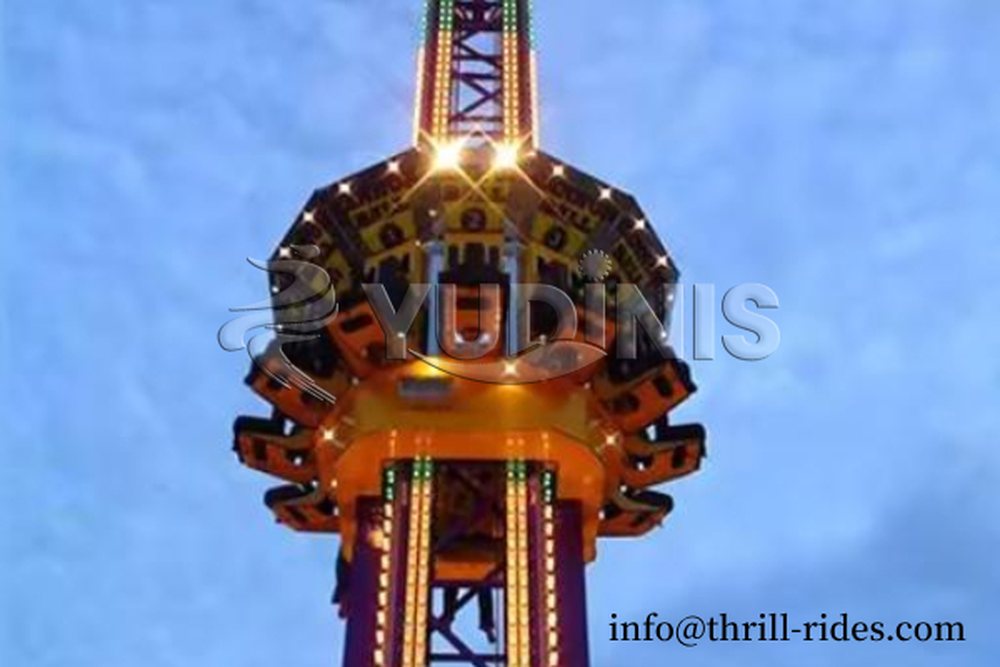
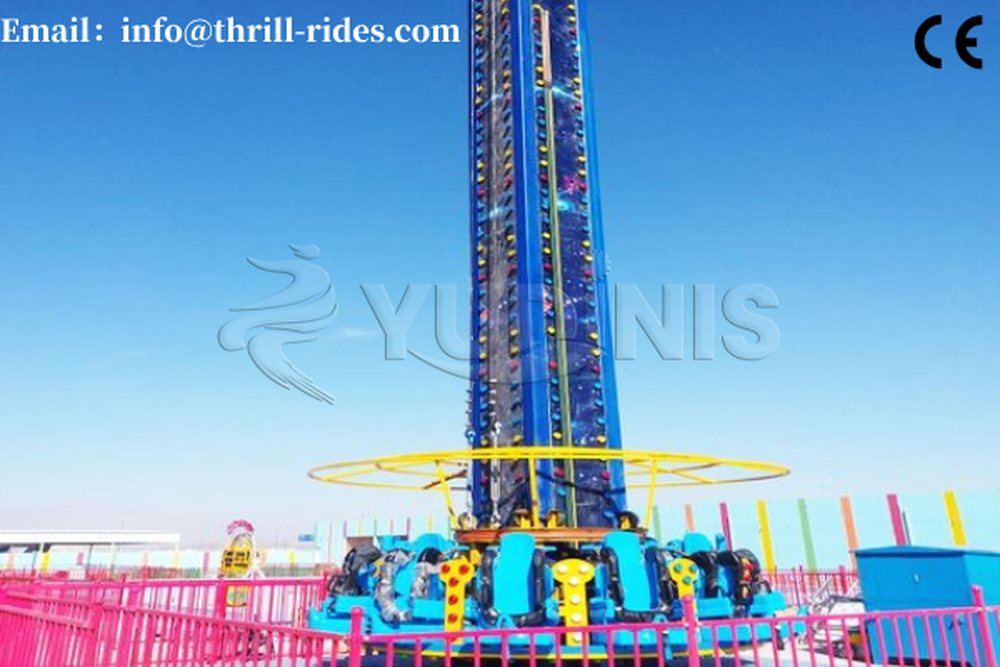
Tour de chute vs chute libre: compare all four vertical rides
Use the model number as a starting point, not as the complete site requirement. Le 35 m tour, Par exemple, has a 32.4 m equipment height and a 28.5 m hauteur de travail. Le 63 m free fall has a 63 m structure and a lower operating height. Approval drawings and foundations must use the final engineering data, not the model name alone.
| Modèle | Hauteur de l'équipement | Hauteur de fonctionnement | Cavaliers / faire du vélo | Empreinte | Descent | Puissance installée | Prix indicatif |
|---|---|---|---|---|---|---|---|
| 15 m tour tournante | 16.9 m | 12.5 m | 12 | 8 x 8 m | 6.2 MS | 40 kW | À partir de 69 500 $ US |
| 25 m tour tournante | 25 m | 19.5 m | 16 | 9 x 9 m | 6.1 MS | 70 kW | From US$98,500 |
| 35 m tour tournante | 32.4 m | 28.5 m | 16 | 11 x 8 m | Jusqu'à 4 MS | 90 kW | À partir de 155 000 $ US |
| 63 je suis en chute libre | 63 m | 52 m | 32 | 15 x 15 m | Jusqu'à 80 km / h | 520 kW | À partir de 597 900 $ US |
Prices are indicative factory figures. Tax, fret, fondation, local electrical work, levage, installation supervision and approvals are quoted separately. Confirm the final container plan and weight after the cabin, theme and market requirements are fixed.
What a rotating drop tower does
A rotating drop tower lifts one cabin, turns it at the top and then lowers it through a controlled high-speed descent. Rotation is the product difference: riders get a changing view before the drop, so the ride works for families who want height without committing to a full-scale free-fall attraction.
The three models form a clear capacity ladder: 12 riders on the 15 modèle m, then 16 riders on the 25 m et 35 m modèles. The jump from 25 m à 35 m is therefore not mainly about seat count. It buys a taller structure, a stronger landmark and a higher operating height, together with more power and heavier installation.
15 m drop tower: compact first vertical ride
Le 15 m model is the best fit when the plot or electrical supply is the first constraint. It uses an 8 x 8 m equipment footprint and 40 kW puissance installée, making it the practical choice for an indoor centre, parc de la ville, family park or fairground with limited space.
Le 16.9 m equipment height still matters. Pour une installation en intérieur, check finished floor to ceiling height, poutres, éclairage, evacuation routes, floor loading and the delivery route. Do not compare the 12.5 m operating height with the building height and assume the equipment will fit.
Read the detailed 15 m rotating tower specifications before planning the slab or placing the order.
25 m drop tower: the usual first outdoor step
Le 25 m modèle porte 16 cavaliers, operates at 19.5 m and fits a 9 x 9 m equipment footprint. À 70 kW, it remains within the electrical range of many parks while offering a more visible structure and a larger cabin than the compact model.
For a park adding its first paid vertical ride, this is often the balanced option: enough capacity to matter, but substantially less power and site work than the 63 je suis en chute libre. The business case still needs an actual cycle time. Ask for boarding, ascenseur, rotation, release, unload and restraint-check durations rather than comparing motor power alone.
35 m drop tower: landmark height without free-fall power
The marketed 35 m model has a 32.4 m hauteur de l'équipement, un 28.5 m operating height and an 11 x 8 m equipment footprint. It carries 16 riders and uses 90 kW puissance installée. Dual hydraulic cylinders and a lower maximum descent speed distinguish it from the free fall.
Choose this model when the ride must be visible across the park or from the entrance, but the site still cannot support a 63 m landmark. The approval package, exposition au vent, fondation, crane position and operating wind procedure all become more important than on the two shorter towers.
63 je suis en chute libre: a destination attraction, not a larger tower
Le 63 m free fall changes the product category. It carries 32 cavaliers, reaches up to 80 km/h and has a documented capacity of 180 coureurs par heure. Le 520 kW installation is more than five times the 35 m tower’s 90 kW and requires a dedicated electrical design.
Its 15 x 15 m equipment footprint is only the beginning of the site requirement. Plan the queue, gate, poste d'opérateur, maintenance access, lightning protection, fondation, crane area, emergency access and the space needed to unload and stage components. The ride only makes sense when the destination market, ticket price and opening plan can support a major attraction.
Comparez les 63 m tour en chute libre or start from the complete free fall and drop tower range.
Site checks that decide the model before price does
- Height approval: confirm the permitted structure height, lightning rod or antenna allowance, aviation or local height restrictions and sightline requirements.
- Hauteur libre finie: equipment height is not building height. Add installation clearance, éclairage, beams and maintenance access for indoor projects.
- Foundation and ground: the local engineer must use the selected model’s loads and anchor drawing. Le 63 m ride cannot use a foundation designed from a lower tower.
- Pouvoir: confirm voltage, phase, charge totale connectée, transformer capacity, cable route and distance to the control position. La gamme s'étend de 40 kW à 520 kW.
- Queue and boarding: separate entry, exit and operator space. A faster ride does not fix a poorly sized gate or restraint-check process.
- Wind, lightning and emergency: agree monitoring, shutdown, evacuation, rescue access and restart procedures from the final manual and local requirements.
- Delivery and lifting: check container count, poids des composants, crane or forklift capacity, unloading space and the route into the site.
How to compare riders per hour and payback
Use the same formula for every model: riders per cycle × complete cycles per hour × realistic occupancy. A 16-seat tower completing six cycles per hour at 80% l'occupation serait prévue autour 77 cavaliers. Le 63 m free fall has a documented 180 coureurs par heure, but queue discipline, boarding time and the number of open cabins still decide whether that figure is reached.
For payback, compare net ticket revenue after staff, pouvoir, maintenance and downtime—not the ticket price alone. A compact tower may earn less per cycle but can open in a lower-volume market with lower capex. A free fall may move more riders, but 520 kW, approvals and a landmark-level foundation must be recovered over a longer operating plan.
Drop tower price ladder: what changes at each step
15 m tour
Lowest footprint and 40 kW power; suited to a first vertical ride in a compact or indoor venue.
25 m tour
Sixteen riders, 19.5 m operating height and a 9 x 9 m footprint for parks ready to move up.
35 m tour
UN 32.4 m structure and 28.5 m operating height for a landmark position without free-fall power.
63 je suis en chute libre
A 32-rider destination ride with 80 descente km/h, 180 riders per hour and a 520 kW installation.
Installation and operation planning
- Lock the site and model
Confirm the permitted height, parcelle, hauteur libre finie, power and visitor target before paying for foundations.
- Approve the technical package
Use the final foundation loads, disposition des ancres, electrical data, cabin and finish specification.
- Prepare base and access
Complete civil work, power route, crane position and the staging area against the approved drawing.
- Install, test and train
Assemble against the packing list, test the complete cycle and emergency functions, then train operators and hand over records.
- Operate and inspect
Complete opening checks, scheduled mechanical and electrical inspection, weather shutdowns and records required by the manual and local authority.
Drop tower and free fall questions buyers ask
What is the difference between a drop tower and a free fall?
A rotating drop tower lifts, turns and lowers a single riding cabin through a controlled descent. A free fall is designed around a larger, faster drop; le 63 m modèle porte 32 cavaliers, reaches 80 km/h and needs 520 kW.
Which drop tower is best for a compact park?
Le 15 m tower is the compact option with a 12-person cabin, 8 x 8 m equipment footprint and 40 kW power. Le 25 m model is the next step when the site can support a larger landmark and more capacity.
Can a drop tower run indoors?
The compact model may suit an indoor site, but only after checking finished clear height, chargement au sol, accès à la livraison, queue space, evacuation and local ride requirements.
Why is the 35 m model listed with a 32.4 structure?
The model name is the commercial size. The equipment height is 32.4 m et la hauteur de fonctionnement est 28.5 m. Approbation, foundation and installation drawings must use the engineering dimensions, not the model label alone.
How much power does each ride need?
The rotating towers use 40 kW, 70 kW et 90 kW puissance installée. Le 63 m free fall uses 520 kW. The final electrical design must include lighting, controls and the local power factor requirements.
How many riders can a free fall carry?
Le 63 m free fall carries 32 riders and has a documented capacity of 180 coureurs par heure. Actual throughput still depends on boarding time, contrôles de contention, operator procedures and queue layout.
How much land does a drop tower need?
The listed equipment footprints range from 8 x 8 m à 15 x 15 m. Add the safety boundary, file d'attente, entry and exit, poste d'opérateur, maintenance access, foundation extent and delivery or crane area.
Is a 63 m free fall a good first vertical ride?
It is normally a destination attraction rather than a first family ride. It requires 520 kW, a major foundation, more crane and installation work, and a market that can support the ticket capacity.
Étape suivante
Envoyer le pays, site plan, maximum permitted height, hauteur libre finie, available power and target riders per hour. We will confirm whether the 15 m, 25 m ou 35 m rotating tower fits—or whether the site and business case support the 63 je suis en chute libre. Review drop tower height and approval requirements et drop tower power requirements before requesting the quotation.
- Pays
- Taille ou plan du site
- Intérieur ou extérieur
- Les manèges que vous avez en tête
- Date d'ouverture
Je préfère parler? WhatsApp nous, ou par email [email protected]