Searching for the types of flat rides usually means comparing very different machines under one loose industry term. Carousels, Ferris wheels, flying chairs, pendulum rides, drop towers and flying turntables can all be discussed as flat rides, but they serve different audiences, occupy different safety envelopes and have different operating models.
This guide separates the common flat-ride families, explains where the term overlaps with “thrill ride”, and then compares three commercially different DINIS thrill rides. The goal is to help a park choose by site, passenger mix and operating plan rather than by ride name alone.
What counts as a flat ride?
In everyday amusement-industry use, a flat ride is a mechanically driven attraction that operates on a compact base rather than following a long, closed coaster track. It may rotate, swing, lift, drop, spin or combine several motions. The passenger unit normally stays within a defined platform or safety envelope.
This is a useful commercial description, not a universal legal or engineering definition. Operators, manufacturers and local regulators may classify the same machine differently. Approvals should always follow the actual model, drawings, operating manual and the rules of the installation country.
A roller coaster is normally treated separately because the vehicle follows a purpose-built track profile. Water rides, transport rides and walk-through attractions also sit outside the usual flat-ride group.
Types of flat rides at a glance
| Flat ride family | Main motion | Typical buyer | Main planning question |
|---|---|---|---|
| Carousel / merry-go-round | Platform rotation with fixed or moving figures | Family parks, malls, fairgrounds and mixed-use destinations | Theme, seat mix, platform diameter and indoor ceiling height |
| Ferris wheel / observation wheel | Vertical rotation with passenger cabins | Parks, waterfronts, resorts and city destinations | Height approval, wind, foundation, evacuation and landmark value |
| Flying chair / swing ride | Rotation with suspended chairs and lift or head-swing motion | Family parks, carnivals and fairgrounds | Moving envelope, rider profile, wind and operating capacity |
| Pendulum ride | Large repeated swing with rotation | Thrill-focused parks and high-throughput attractions | Full swing envelope, power, foundation and queue design |
| Drop tower | Vertical lift and controlled or accelerated descent | Parks adding a height landmark or compact thrill ride | Approved height, operating envelope, power and evacuation |
| Flying turntable | Rotation combined with lift and motion of suspended seats | Compact parks and operators seeking a distinctive thrill layout | Footprint, passenger movement and the complete dynamic envelope |
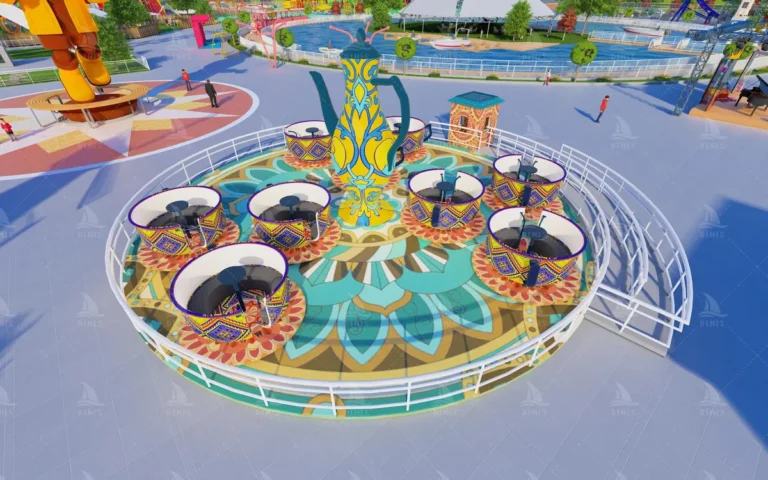
| Tea cup / family spinner | Platform rotation with individually spinning passenger units | Families, indoor centres and mixed-age parks | Access, spinning control, queuing and family ride mix |
| Bumper car arena | Driver-controlled cars inside a defined floor area | FECs, family parks and indoor entertainment centres | Floor, power system, fencing, vehicle mix and supervision |
Flat ride types in pictures
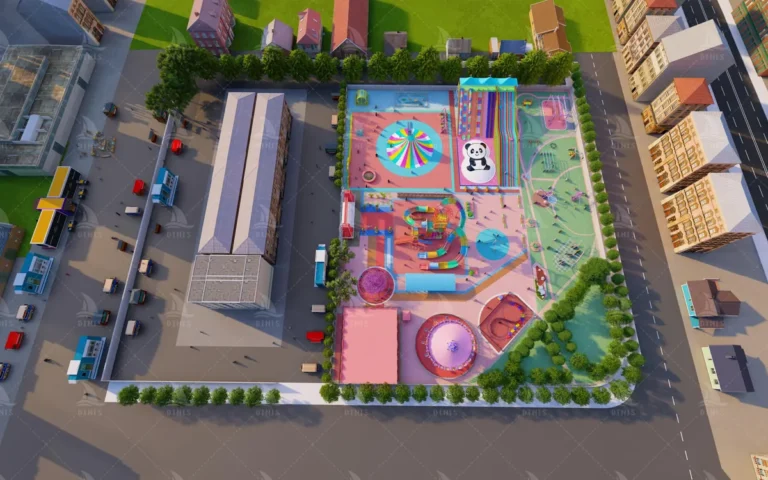
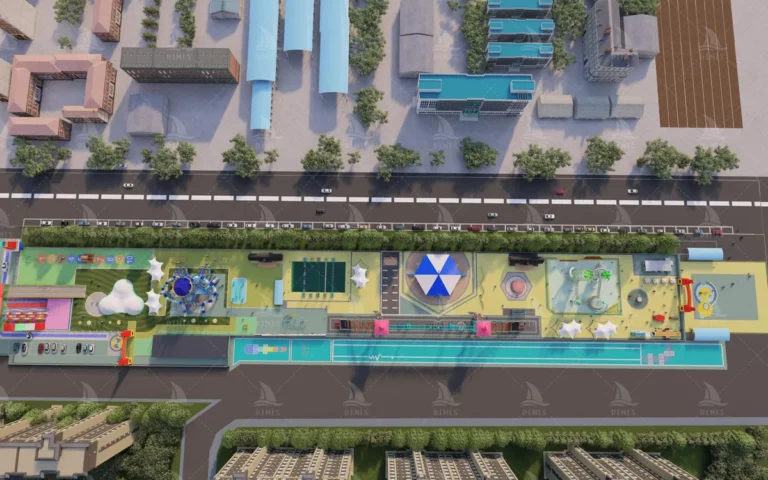
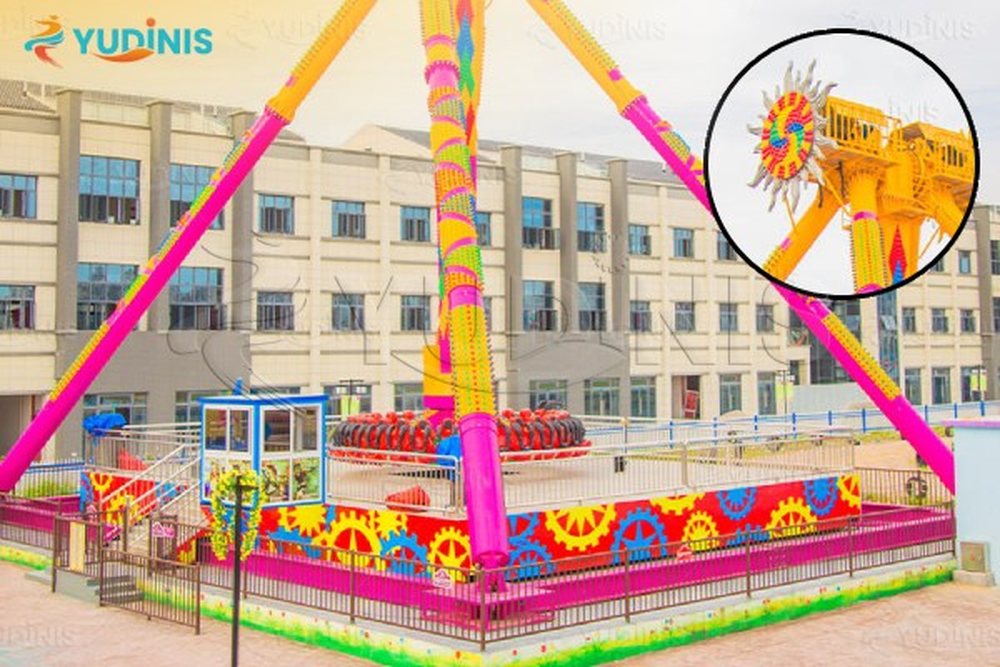
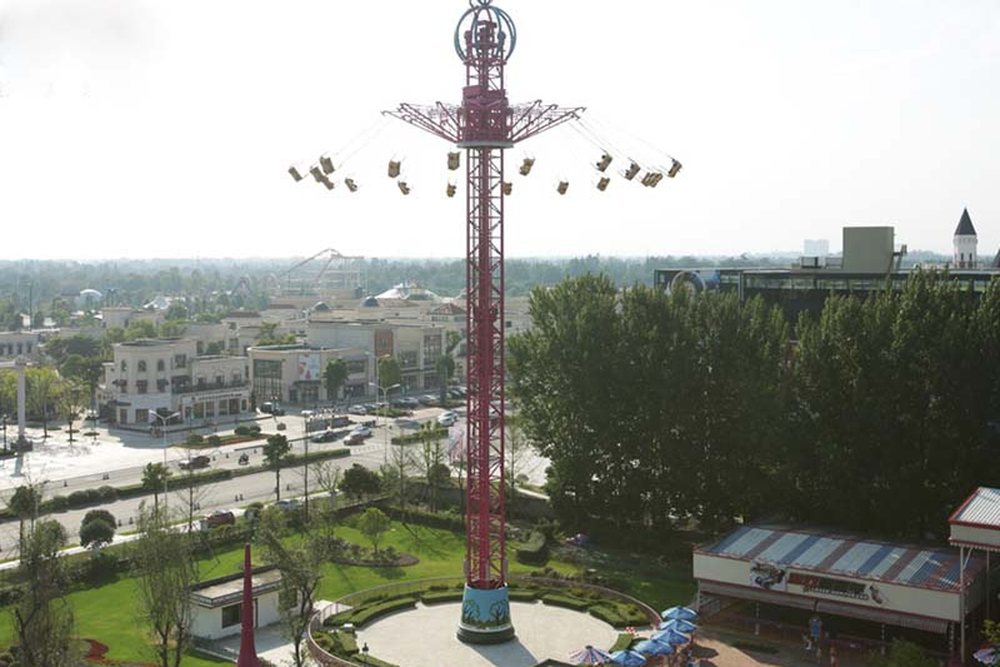
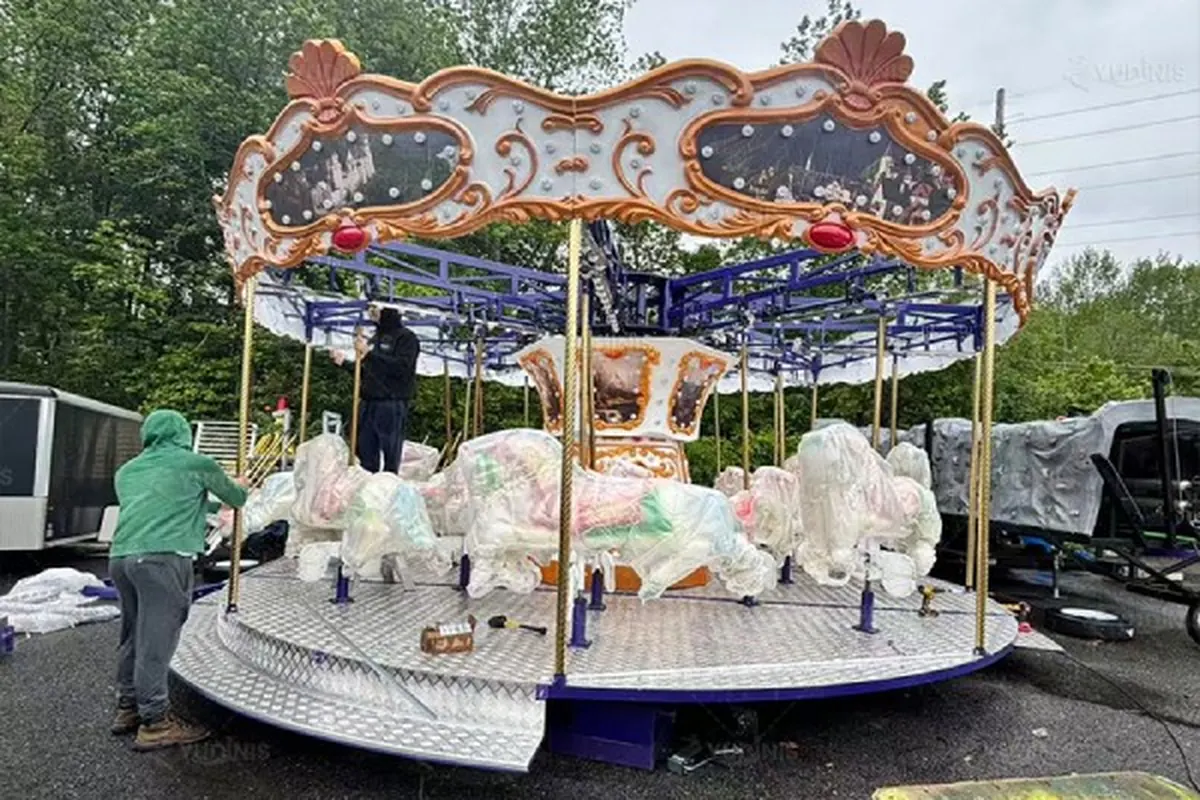
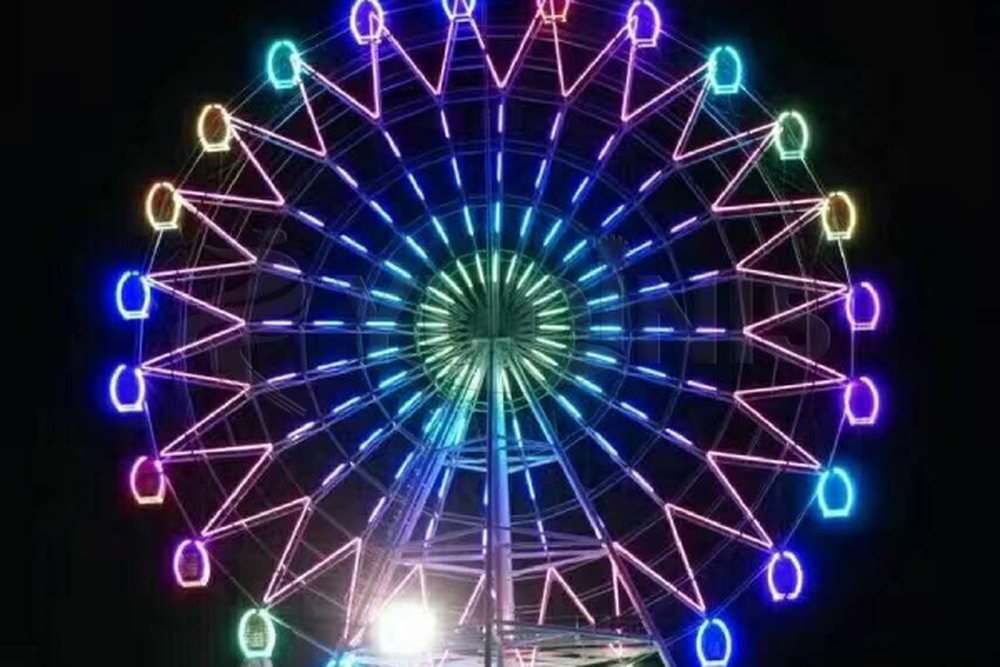
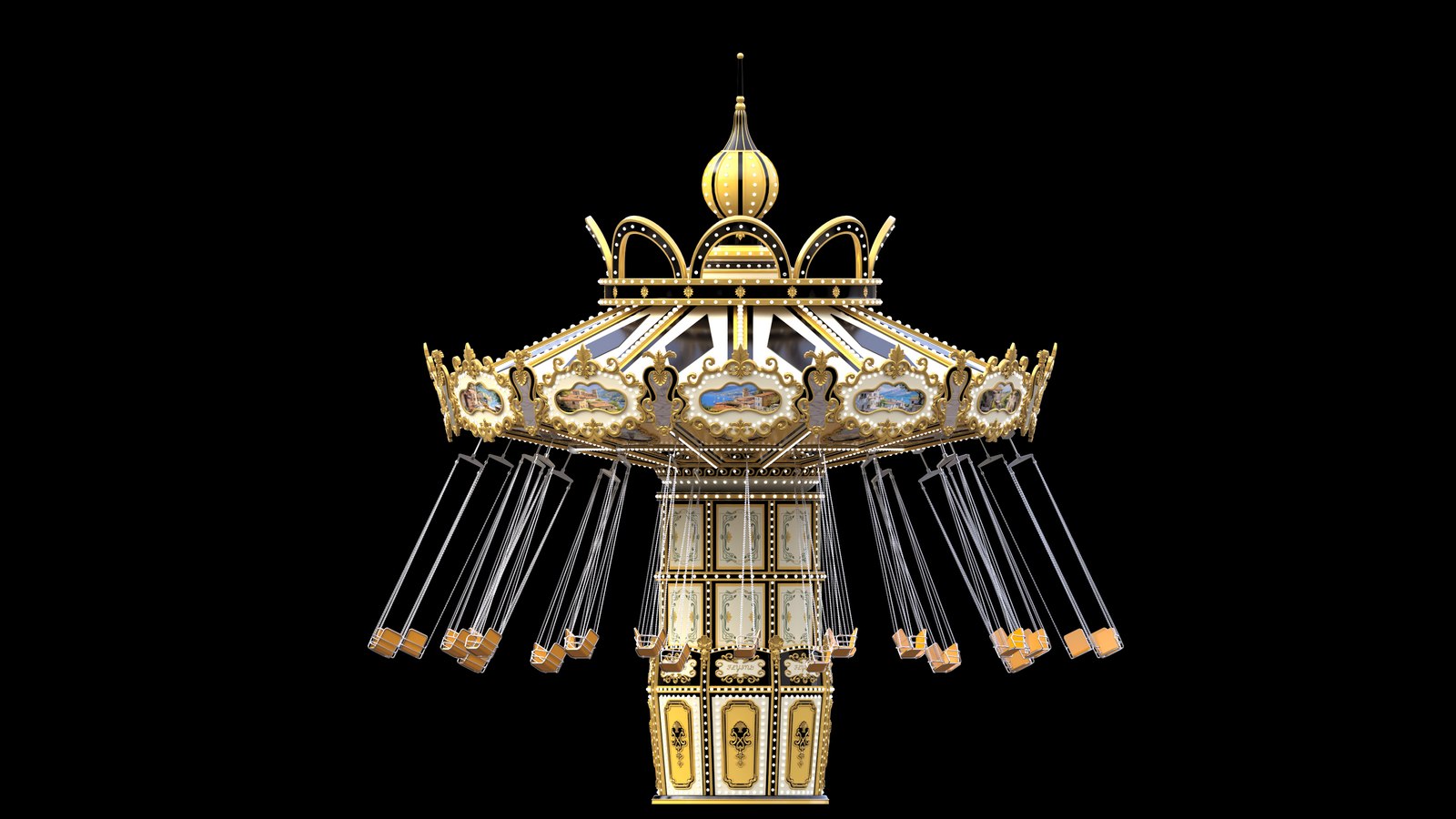
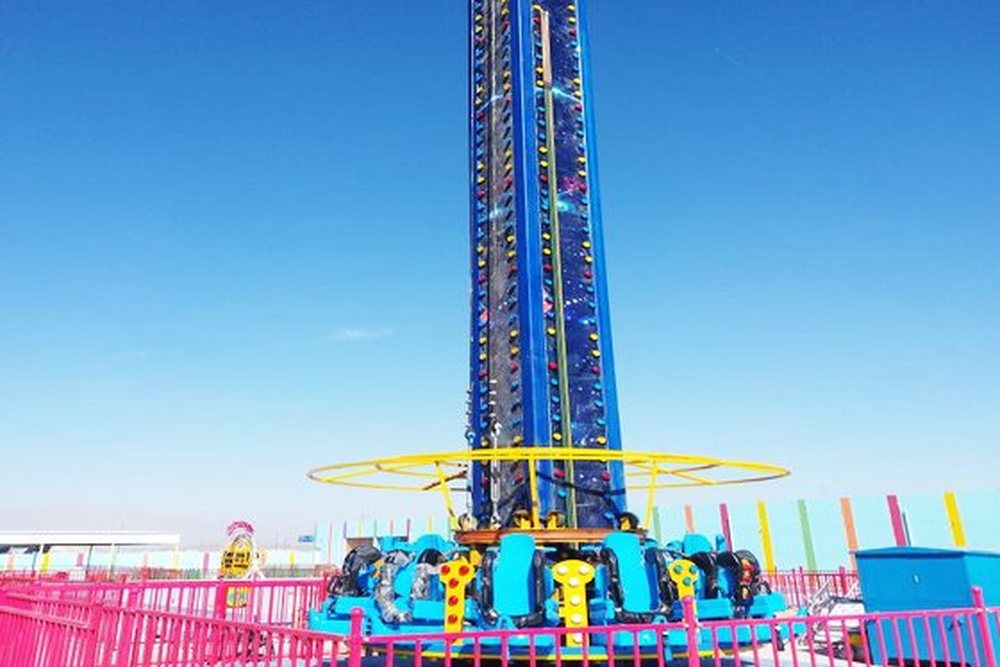
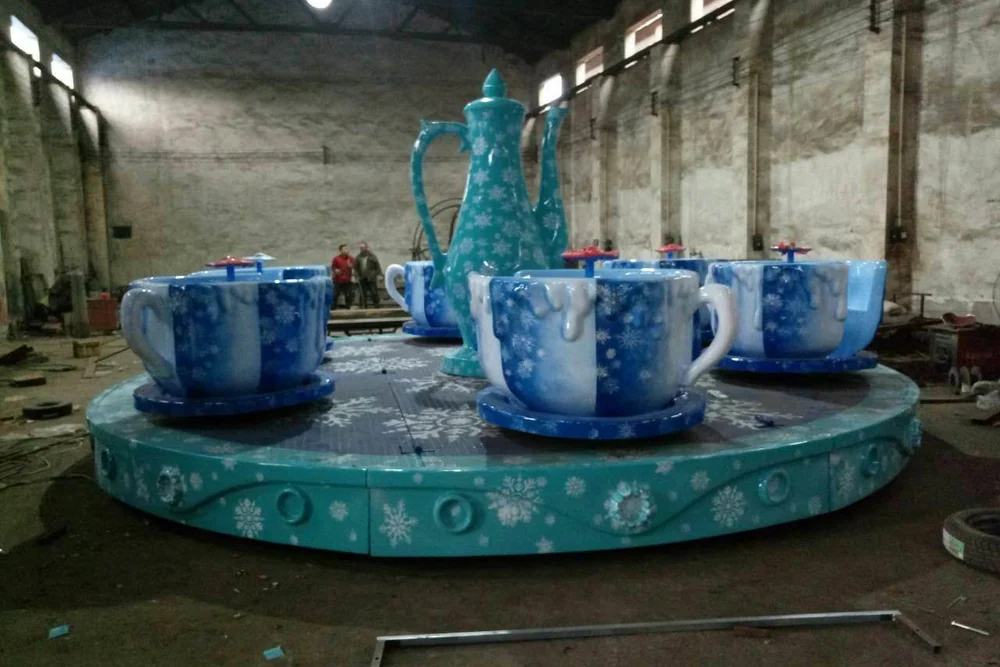
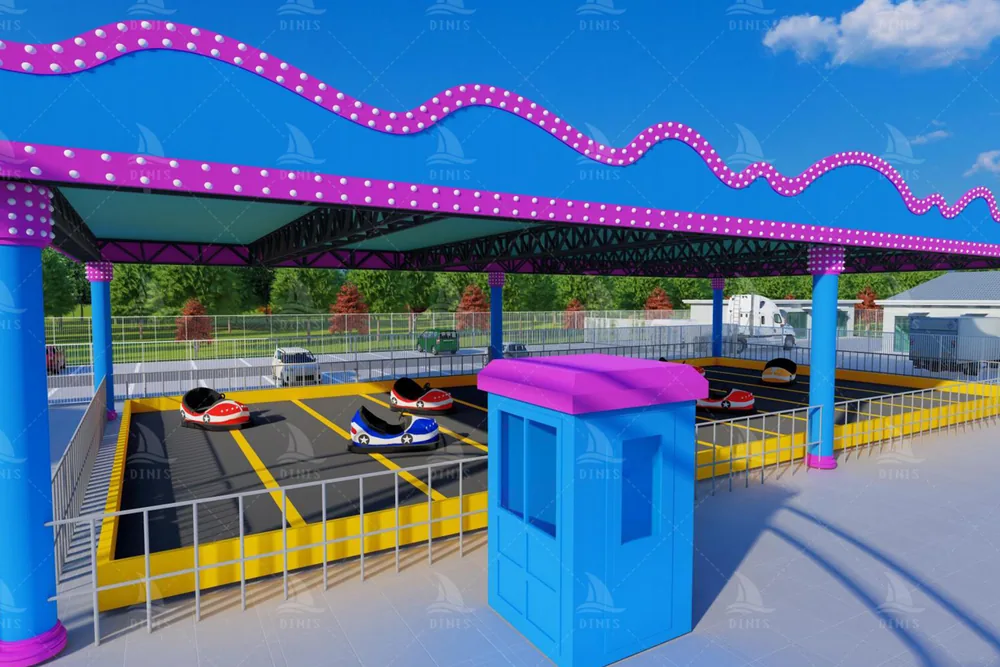
The same flat-ride label covers family attractions, rotating observation rides, swing rides, drop rides and high-capacity thrill machines. These examples show how different the passenger experience and site requirements can be.

Flat ride vs thrill ride: the terms overlap
“Flat ride” describes a construction and motion family. “Thrill ride” describes the intensity of the experience. A ride can be both. A giant pendulum is a flat ride and a thrill ride; a carousel is still commonly grouped with flat rides but is usually a family attraction.
| Term | What it describes | Examples |
|---|---|---|
| Flat ride | A mechanically driven ride operating on a defined base rather than a long coaster circuit. | Carousel, Ferris wheel, flying chair, pendulum, drop tower |
| Thrill ride | A ride selected for speed, height, inversion, strong swing or other high-intensity sensations. | Giant pendulum, drop tower, intense flying turntable |
| Family ride | A ride designed around shared participation and a lower intensity threshold. | Carousel, tea cups, gentle Ferris wheel, some swing rides |
| Roller coaster | A track-guided ride whose vehicle follows a designed route of climbs, turns and drops. | Family coaster, spinning coaster, crazy mouse |
Use the classification to narrow the equipment family, then compare the actual model on capacity, site requirements, rider restrictions and operating cost. The label alone does not prove that a ride is suitable for a particular park.
Three thrill flat rides built by DINIS
The current DINIS thrill-ride range contains three different answers to the same question: how to add a strong paid attraction without building a complete roller coaster.
| Model | Riders | Land / envelope | Power | Price from |
|---|---|---|---|---|
| 25-seat giant pendulum | 25 per cycle | 20 × 18.5 m plus a 28 m safety envelope | 80 kW | US$125,000 |
| 42 m Flying Sky | 32 per cycle | 22.7 m dynamic sweep | 45 kW lift + 4 × 7.5 kW rotation | US$185,800 |
| Flying Turntable | 24 per cycle | 12 × 15 m | 85 kW | US$166,000 |
25-seat giant pendulum: capacity and repeat rides
Twenty-five riders per cycle, a swing angle up to 100° and a 14.9 m operating height make this the most throughput-oriented choice in the group. It suits a park that expects a large queue and wants a ride that feels busy from the path.
The full safety envelope of 28 × 18.5 × 18 m is larger than the installed machine. That envelope controls fence position, adjacent paths, landscaping and future development. See the giant pendulum specifications before fixing the site.
42 m Flying Sky: landmark height and evening value
The Flying Sky lifts 32 riders to a 29.5 m operating height and rotates at 10 r/min. Its commercial value comes from visibility and the change in experience after dark, when lighting turns the ride into part of the park’s skyline.
Approval to build to height, wind exposure, lift maintenance and the 22.7 m dynamic sweep must be confirmed before purchase. Full technical information is on the Flying Sky page.
Flying Turntable: a compact but intense footprint
The Flying Turntable carries 24 riders on a 12 × 15 m footprint and is shipped in one container. It is the logical first comparison when the park wants a distinct thrill motion but has a tighter plot or a more constrained lifting plan.
Its compact dimensions do not remove the need to plan the moving envelope, fencing, queue and maintenance access. Review the Flying Turntable page against the actual plot.
Choose by the site and business goal
| Project goal | First direction | Why |
|---|---|---|
| Move the largest possible peak-time queue | 25-seat giant pendulum | Highest rider count per cycle and a strong visual draw from the main path. |
| Create a landmark that also works at night | 42 m Flying Sky | Height, visibility and lighting provide a second experience after dark. |
| Add a distinctive thrill on a tighter plot | Flying Turntable | Comparatively compact site requirement and single-container shipping plan. |
| Build a family-first ride mix | Carousel, Ferris wheel, flying chair or family spinner | Lower intensity and broader age participation may fit the audience better than a major thrill ride. |
For a carousel-specific seat comparison, see the separate carousel seats and figures guide.
Land is not the same as footprint
The installed footprint is only the equipment’s parked position. A complete site plan must also include the moving envelope, safety fence, queue, boarding gate, operator position, maintenance access, emergency route and the space needed for delivery and lifting.
- Use the manufacturer’s final dynamic envelope, not the ride’s static length and width.
- Check clear height, underground services and crane or lifting access.
- Keep the queue outside the moving zone and away from the evacuation route.
- Confirm fence loads, gates and the method for locking the ride during maintenance.
- Check how the chosen site affects visibility, noise and guest circulation.
Capacity is more than riders per cycle
Estimate hourly throughput using riders per cycle, cycles per hour and realistic occupancy. A theoretical count that ignores boarding time, restraint checks, unloading and queue organization will overstate revenue.
Staffing also differs by model. The comparison should include operator numbers, boarding support, maintenance routines and the time required for daily checks. The existing thrill ride operating cost guide explains the wider cost structure.
Power, foundations and approvals
The three models show why “about 80 kW” is not enough for electrical planning. The giant pendulum and Flying Turntable use approximately 80–85 kW, while the Flying Sky combines a 45 kW lift with four 7.5 kW rotation drives. The installed load, starting characteristics and lighting/control allowances must be confirmed on the final drawing.
Foundation design, wind requirements, height approval and evacuation procedures are project-specific. Do not buy from a headline height or a photograph before confirming the approved dimension and foundation scope.
What changes the price
- Model, passenger capacity and structural size.
- Foundation, fence and installation scope.
- Lighting, theme, colour and branding package.
- Voltage, frequency and control-system requirements.
- Shipping method, container plan and unloading access.
- Inspection documents, spare parts and site support.
The starting prices in the comparison are factory references. Freight, tax, foundations, lifting, installation, local inspection and site works are confirmed separately.
What to send for a model recommendation
- Site plan with static footprint and available moving space.
- Indoor or outdoor location and maximum permitted height.
- Target visitor age and thrill level.
- Expected peak queue and required hourly throughput.
- Available power supply and voltage.
- Budget range, opening date and installation country.
- Any requirements for lighting, theme or branding.
Send the project data through the flat ride inquiry form. DINIS can then narrow the comparison to the models that fit the actual site.
Frequently asked questions about flat rides
Are carousels flat rides?
Yes, carousels are commonly classified as flat rides because they operate from a compact rotating platform rather than a long track circuit. They are usually family rides rather than high-intensity thrill rides.
Are Ferris wheels flat rides?
They are often grouped with flat rides, although terminology varies by market and regulator. For procurement, the important details are the approved height, wind, foundation and evacuation plan.
Is a roller coaster a flat ride?
Normally no. A roller coaster vehicle follows a purpose-built track profile, so it is compared separately from a base-mounted rotating, swinging or lifting ride.
What is the difference between a flat ride and a thrill ride?
Flat ride describes the mechanical layout; thrill ride describes the intensity. The same attraction can be both, such as a giant pendulum or drop tower.
Which flat ride has the highest capacity?
It depends on cycle time and approved occupancy. The 25-seat giant pendulum carries the highest number of riders per cycle among the three DINIS thrill models compared here.
Which thrill ride needs the smallest plot?
The Flying Turntable has the smallest installed footprint in this comparison at 12 × 15 m, but the moving envelope, fence, queue and maintenance access must still be planned.
Can two flat rides share one area?
They can be located beside each other if the moving envelopes, queues, evacuation routes and maintenance access do not overlap. Confirm placement on a coordinated site plan.
How long does delivery take?
Delivery time depends on model, customisation, approval documents, payment schedule and shipping route. It is confirmed in the project quotation rather than taken from a generic catalogue.
Start with the ride family, then compare the model
Use the definitions and types above to narrow the search. A family park may need a carousel or Ferris wheel before a major thrill ride, while a park with a large queue and suitable land may justify a giant pendulum. The final decision should combine the site drawing, moving envelope, power, passenger target and full delivered scope.
- Country
- Site size or plan
- Indoor or outdoor
- Rides you have in mind
- Opening date
Prefer to talk? WhatsApp us, or email [email protected]