Buying notes for the 36-Person Rail Train
A sightseeing train does two jobs at once. It carries visitors across a large site, and it sells a ticket while doing it.
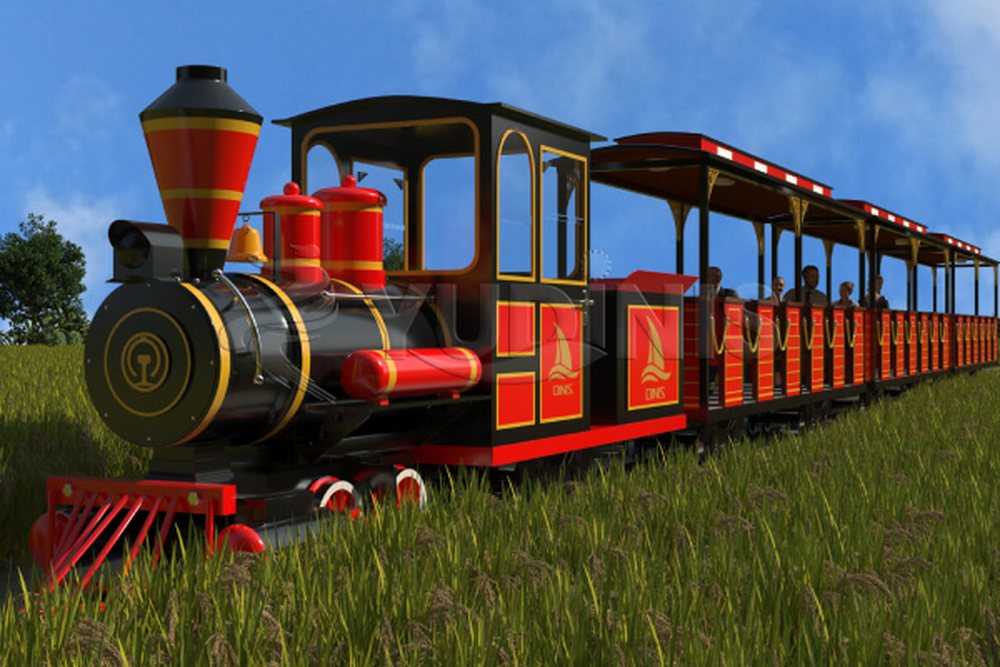
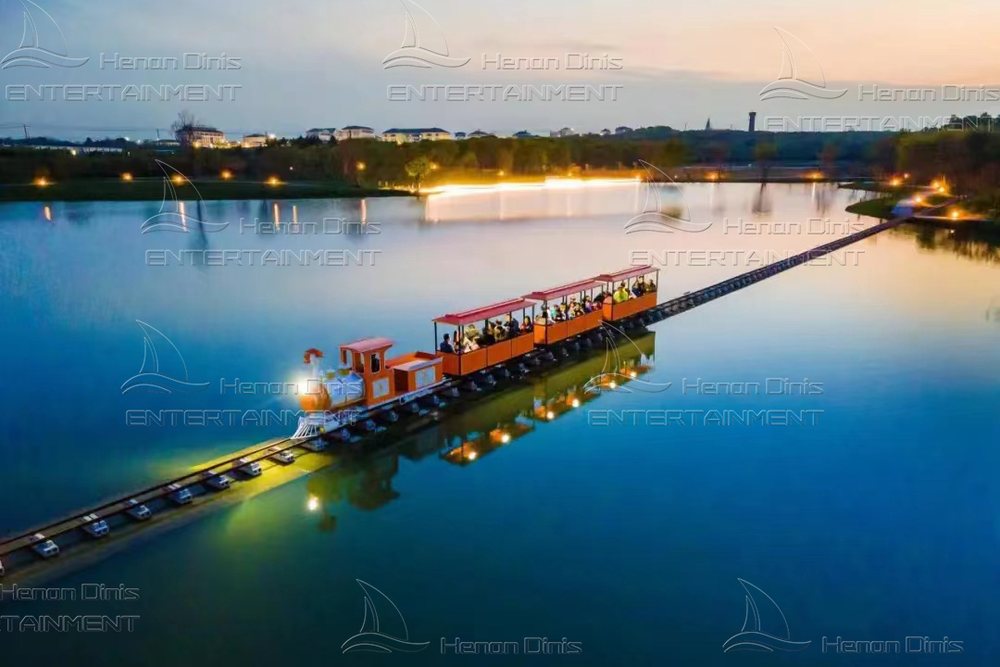
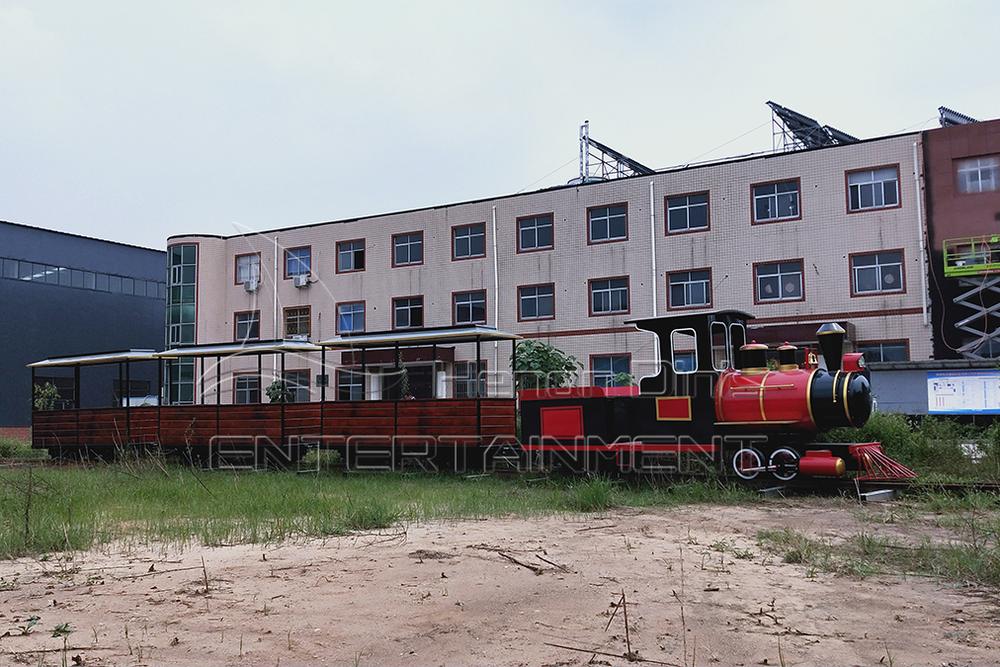
The 36-person model is the version most parks start with: one locomotive, three carriages of twelve, and a route shaped around your own site. The train is a fixed cost. The track is not, and that is the number to plan first. For higher capacity on the same principle, the 54-person rail train carries 18 per carriage on a wider gauge. Track laying and assembly are covered step by step in how to assemble the train ride.
The route sets the budget, not the train
Track is quoted by the metre, with 12 kg rail on concrete sleepers. On a 600 m loop that line item is as important as the train, and it is the part buyers estimate from memory.
Walk the site before you ask for a quotation. Mark the station, the stops and the depot on a plan, then measure the line. A route drawn on a map and a route that respects the ground are rarely the same length.
- Walk the line at ground level
Check drainage, tree roots and any service trench that crosses the route. Those three items move a track more often than anything else.
- Mark every stop before you price it
Two or three stops carry more riders per hour than a single station, and each one needs a platform and a waiting area.
- Find the tightest curve
The minimum turning radius is 10 m. If the tightest bend is below that, the route changes before the track does.
- Plan the depot for the longest train
The locomotive is 5.1 m and each carriage 4.35 m. Leave room for the train you may add later, not only the one you are buying.
- Confirm the gradient
The line handles up to 1.5%. A route with a steeper section needs a different alignment, and that is cheaper to fix on paper.
What one train does in a day
Twelve riders per carriage with forward-facing seats, thirty-six in total, at up to 5 km/h. The speed sounds modest until you convert it: a 700 m loop with two stops runs in about twelve minutes, which is roughly five trips an hour at a steady pace.
That is around 180 passengers an hour with one train, and it is why the route design matters as much as the seat count. A shorter loop with a clear station beats a long scenic line with a single stop.
Power: a battery train on a 72 V pack
Two 5.5 kW AC motors run from a 72 V 250 Ah lithium pack. There is no diesel exhaust along the route, which matters in zoos, botanical gardens and enclosed valleys.
Charging is planned around your operating day: charge overnight, top up at midday if the schedule is long. Tell us the route length and the number of trips and we will confirm the pack size against your day.
Theming the carriages
A train that matches the park
Body shape, colour and trim are chosen to sit with the buildings around it. Most scenic areas and zoos choose this route, because the train should look like it belongs.
A train that carries a brand
A character theme turns the carriages into a moving advertisement. If your park already runs a theme, the same artwork can be carried across the train, the station and the tickets.
Price and what sits outside it
The train is quoted at US$42,400 to US$44,600 for the standard configuration. Track, sleepers, foundation work and the station platforms are quoted against your own route, which is why two parks with the same train can have very different totals.
Send the route drawing with the stops marked. You get the train price, the track price per metre and a delivery schedule in one reply. If the route grows later, the 54-person rail train and the large rail sightseeing train share the same approach at a bigger scale.
Questions buyers ask about the 36-person track train
How long does the track take to build?
Track laying is local work and runs in parallel with production. Send us the route length and the ground conditions and we will confirm the package and the schedule.
Can we add carriages later?
Yes, and the drive is sized with that in mind. Plan the depot and the platform length for the longer train from the start.
Does the route need a fence?
Your local safety rules decide that. Most parks fence the line where it crosses a walkway and leave the scenic sections open.
What is the gauge and why does it matter?
406 mm. It sets the curve radius and the track cost, and it is the figure your track contractor needs before quoting.
Can it run indoors?
It is a battery train, so a covered route is possible. Check the ceiling height at the highest point of the carriages and the ventilation of the charging area.
How many staff does it need?
One driver, plus a platform attendant at busy stops. A second attendant at the main station keeps boarding time down on peak days.
Technical reference: 36 passengers, 12 per carriage / one locomotive and three carriages / locomotive 5.1 x 1.1 x 2.01 m / carriage 4.35 x 0.99 x 1.65 m / 5.5 kW x 2 AC motors, 72 V 250 Ah lithium / 406 mm gauge on 12 kg rail with concrete sleepers / up to 5 km/h / turning radius 10 m minimum / gradient up to 1.5% / track quoted per metre.
DINIS builds rail sightseeing trains to order up to 200 passengers. Send the route length, the station positions and the visitors you expect per hour, and the reply covers train length, track plan and price band.
- Country
- Site size or plan
- Indoor or outdoor
- Rides you have in mind
- Opening date
Prefer to talk? WhatsApp us, or email [email protected]