Buying notes for the Large Wheeled Train
Track is the line item that catches train buyers out. Survey work, ground preparation, rails and sleepers can cost more than the train itself, and once the rails are laid your route is fixed.
A large wheeled train skips all of that. It runs on tyres over a road or a prepared path, and the route can be redrawn next season.
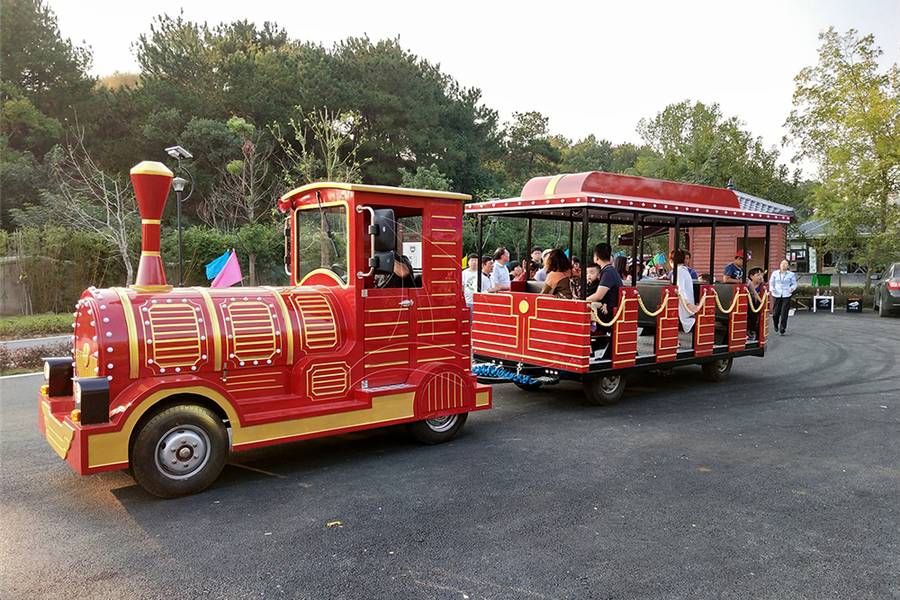
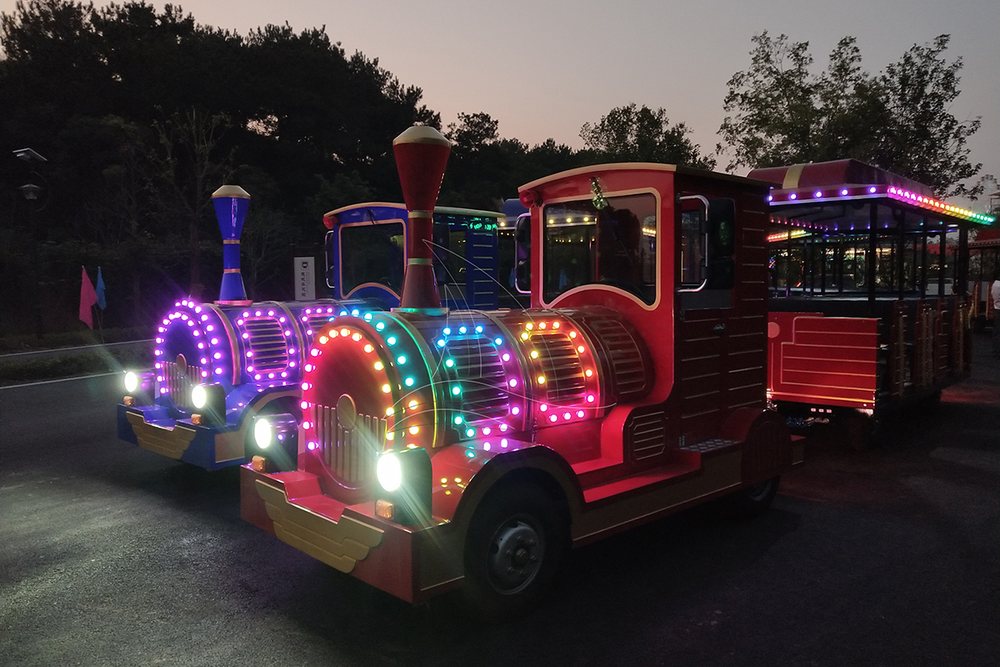
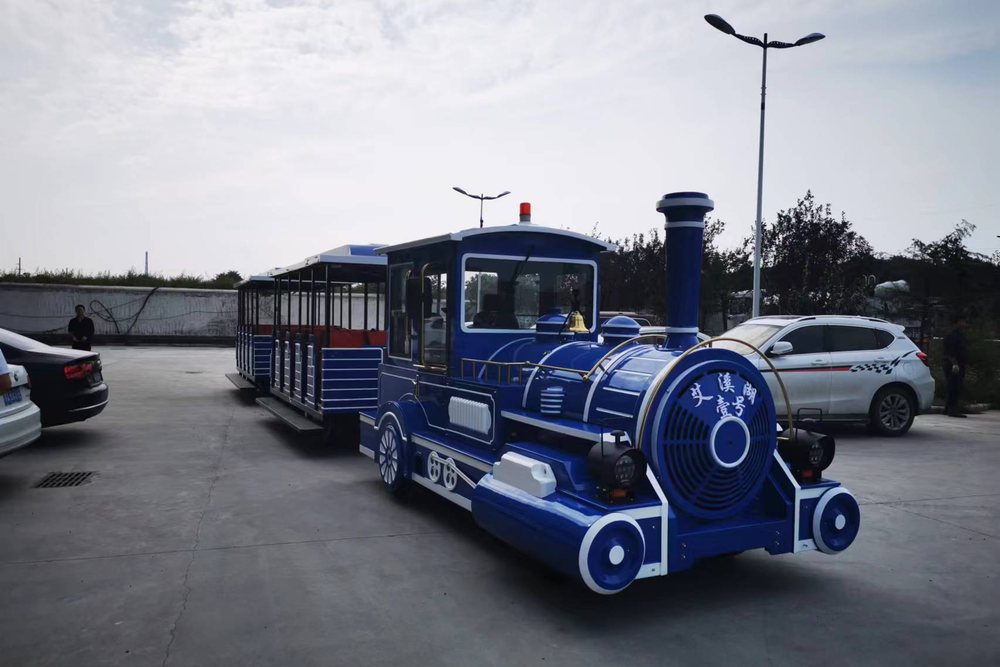
Why parks choose a trackless train over a rail system
The two options answer different questions, and most parks reach the right answer by asking which one they can start earning with sooner.
When rails are the right answer
A rail train carries more passengers per trip, runs a fixed scenic route and gives a smoother ride on a long circuit. It suits a park with a settled master plan and a civil budget for track works.
When the wheeled version wins
Nothing to survey and nothing to maintain under the wheels. You can change the route for events, add a stop for a new attraction, and start running soon after installation.
If your park is still at the layout stage, the wheeled train keeps that decision open. Run a route this season, watch which stops fill up, then move them next season.
When the route is settled and the passenger numbers justify a railway, the rail sightseeing train range is the other half of the choice.
Large wheeled train specifications: three configurations, one vehicle
One vehicle covers three passenger totals. The locomotive carries two people at the front, and each carriage adds 20, 28 or 35 seats.
The locomotive measures 4.2 x 1.86 x 2.35 m and each carriage 3.98 x 1.97 x 2.52 m. Measure your narrowest gate, your depot door and your turning area before you pick the longest configuration, because a 72-passenger train behaves differently on a car park aisle than on a wide park road.
Gradients, gates and stopping distance: planning the route
The climb limit is 7 degrees. That covers most park service roads, resort slopes and scenic loops, and it is the first number to check if your route includes a hill.
Maximum speed with a full load is 20 km/h and the braking distance is within 4 m, so a stop can sit closer to a crossing than most operators expect.
Let visitors see the route. A train that passes the carousel, the food court and the lake gives those areas footfall, and moving a stop later is a sign and a rope rather than a civil project.
Route tip: Plan the route so the longest straight section is the one visitors photograph. A train that looks good from the entrance is a moving advertisement for the rest of the park.
Diesel running costs: fuel, tyres and service items
The engine is a 96 kW Cummins unit meeting China V, the emission standard parks are now asked about when vehicles run inside a public site.
Fuel capacity is 70 L. The front axle runs 6.50-10 tyres and the rear 28 x 9-15, both common sizes your local workshop can source.
Daily checks are short: tyres and pressures, fuel, the 12 V battery pack and a brake test. Budget tyres, engine service and fuel as the main running costs.
Choosing between 42, 58 and 72 passengers
- Count your peak flow, not your average
A weekend afternoon decides the configuration. If school groups arrive together, the 72-passenger train clears them in one trip.
- Measure the tightest point of the route
The minimum turning radius is 7.5 m. Check the narrowest gate and the depot entrance before you add carriages.
- Match the configuration to the trip length
A 1 km loop turns over quickly, so a shorter train still moves a large crowd. A longer scenic circuit suits the bigger configuration.
To place the wheeled train against the rest of the range, start with the sightseeing train collection, or the ride-on train for adults page for the entry end of the family.
What a large wheeled train costs
The indicative factory price starts at US$42,000 for the base configuration. The final figure follows the carriage count, the seat specification and the extras you choose.
- Locomotive, carriages and the standard seat layout
- Factory test run and the documentation set
- Installation guidance on site
Freight, road preparation, spare parts and any cabin branding are quoted separately, so you can see exactly what the base price covers.
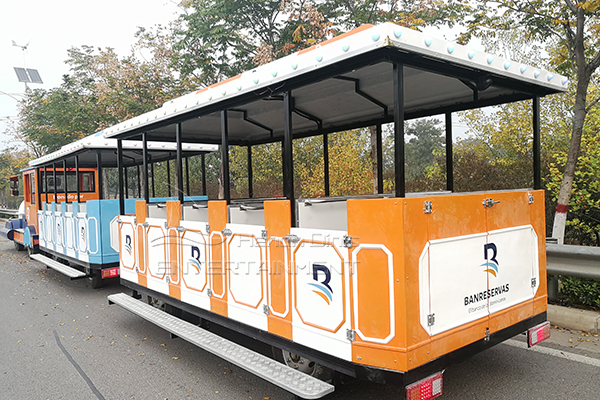
Branding is the most popular addition. The cabin panels take a printed logo, so the train carries your park name through the site all day.
Buyer questions about the large wheeled train
Can it run indoors?
It is a diesel vehicle, so it suits outdoor routes and well-ventilated areas. For indoor transport, the battery-powered sightseeing trains in the range are the practical answer.
How many trips can we run in a day?
At 20 km/h a 1 km loop is a short cycle, so the capacity is high. Send us the route length and the number of stops and we will help you plan the timetable.
Does the route need a special road surface?
A firm, level surface is enough. Loose gravel and sand are not suitable. Tell us what the route is made of today and we will confirm before you order.
How steep a hill can it climb?
Up to 7 degrees with a full load. If your site has a longer climb, send us the gradient and we will look at the configuration with you.
What is the lead time?
About 35 days in production, then shipping in 2 x 40HQ containers. There is no track programme to wait for, so the first trip can run soon after installation.
How are service and spares handled?
One year free of charge plus lifetime maintenance support, and the service items are standard parts your local workshop can supply.
Technical reference: capacity 72, 58 or 42 passengers including the driver / locomotive 4.2 x 1.86 x 2.35 m / carriage 3.98 x 1.97 x 2.52 m / minimum turning radius 7.5 m / gradeability up to 7 degrees / speed up to 20 km/h / braking distance within 4 m / 96 kW Cummins China V engine / 70 L tank / 2 x 40HQ.
- Country
- Site size or plan
- Indoor or outdoor
- Rides you have in mind
- Opening date
Prefer to talk? WhatsApp us, or email [email protected]